
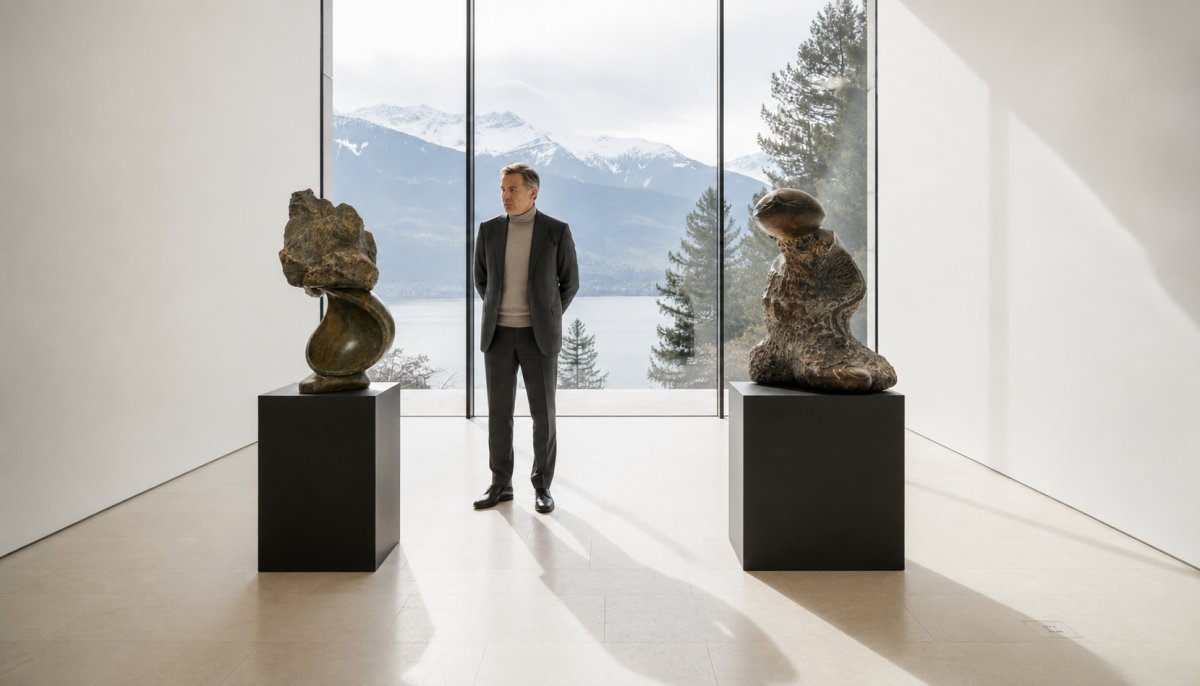
Two seemingly identical stone figures can stand side by side in a prominent international gallery, yet one commands a price ten times higher than its neighbor. You've likely felt that familiar hesitation when admiring the fluid lines of Zimbabwean stone art, wondering if you're looking at a timeless investment or merely a well-crafted souvenir. This uncertainty often stems from a lack of transparent pricing in the primary art market, leaving collectors to question why similar works carry such vastly different valuations. This Shona sculpture price guide from Artgal.Online helps you look beyond the surface to understand the intricate triad of geological rarity, artist lineage, and documented provenance that defines true market value in 2026.
We'll examine how the 2026 regulatory shifts in Zimbabwe and the rising demand for ethically sourced minerals are reshaping the global art landscape. You'll gain the clarity needed to distinguish between entry-level pieces and investment-grade masterpieces, ensuring your collection reflects both cultural significance and sound financial judgment. As the global export market is projected to exceed millions in value this year, understanding the distinction between a master artist and a commercial carver becomes essential. We invite you to explore the factors that transform a beautiful stone carving into a legacy asset, fostering a deeper connection with the hands that shaped it.
Key Takeaways
- Learn how geological factors, such as the labor-intensive carving of rare Springstone and Verdite, directly influence the intrinsic valuation of a piece.
- Master the nuances of this Shona sculpture price guide to distinguish between the historic value of First Generation masters and the rising potential of contemporary voices.
- Understand why the physical scale and intricate complexity of monumental outdoor works create distinct price tiers compared to intimate indoor sculptures.
- Discover how to verify the provenance and authenticity of your acquisition, ensuring your investment is protected by documented history and gallery-standard certification.
- Gain the confidence to navigate the Swiss art market by identifying the hallmarks of investment-grade stone art that celebrate authentic Zimbabwean heritage.
The Core Variables of the Shona Sculpture Price Guide
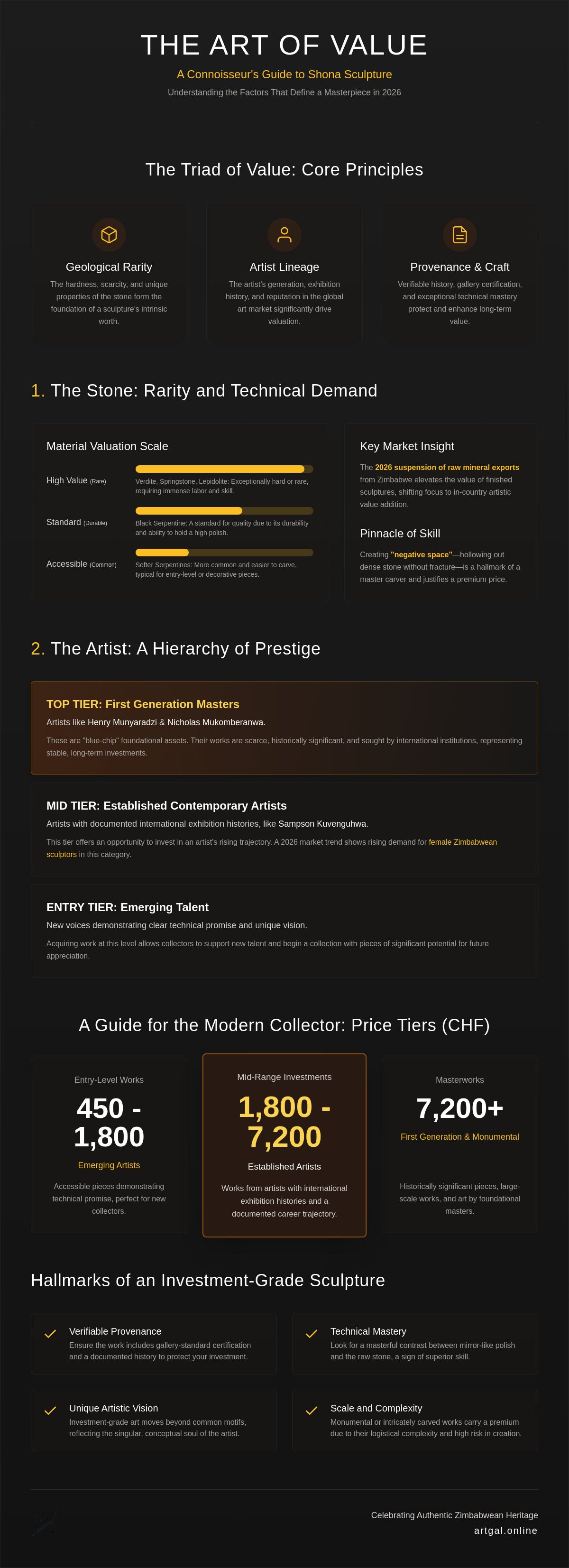
Understanding the valuation of Zimbabwean art requires an appreciation for the physical struggle between the sculptor and the stone. Any comprehensive Shona sculpture price guide must prioritize the geological properties of the medium. Harder stones, such as the vibrant green Verdite or the dense, iron-rich Springstone, demand significantly more labor and specialized diamond-tipped tools than softer serpentines. This physical resistance translates directly into the final market value in Switzerland. Springstone serves as the gold standard for durability and a high-polish finish in Zimbabwean carving. Beyond the material, the scale of the work dictates its presence; a monumental outdoor sculpture involves complex logistics and structural integrity that small decorative pieces don't require. We also see a clear premium for unique artistic vision over repetitive craftsmanship. While traditional "family" motifs hold cultural charm, a conceptual piece that reflects a specific artist's soul often commands a higher price in the global market. To truly grasp the evolution of these styles, one can look back at the history of Shona sculpture, which reveals how individual expression became the hallmark of the movement.
Stone Rarity and Market Demand
The scarcity of specific materials in Zimbabwe creates a natural baseline for pricing. While green and black serpentines are more accessible, semi-precious variants like purple Lepidolite or bright blue Dumortierite are exceptionally rare. The Zimbabwean government's 2026 suspension of raw mineral exports has further emphasized the value of finished works, as the focus shifts entirely to in-country value addition. This scarcity ensures that pieces carved from rare mines remain highly sought after by discerning collectors in Zurich and Geneva, often fetching prices that reflect their geological uniqueness.
The Impact of Technical Mastery
Technical precision is a silent narrator of value. A master's touch is evident in the contrast between a mirror-like high polish and the raw, textured skin of the original stone. Creating negative space, the art of "hollowing out" the stone without compromising its strength, represents the pinnacle of skill. These intricate carvings require a level of patience and risk that justifies a higher price point, as one wrong strike can shatter weeks of work. You can explore these technical nuances further by viewing the works of established Shona artists who push the boundaries of the medium.
Understanding Market Tiers: From Emerging Talent to Master Sculptors
The market for Zimbabwean stone art operates in distinct layers, each offering a different relationship between price and prestige. When consulting a professional Shona sculpture price guide, collectors quickly realize that seniority and exhibition history are the primary drivers of value. First Generation masters, such as Henry Munyaradzi or Nicholas Mukomberanwa, represent the blue-chip foundation of this movement. Their works are scarce. They're highly sought after by international institutions, making them stable, long-term investments. In contrast, the vibrant energy of the second and third generations offers a different kind of opportunity. Identifying high-potential contemporary voices like Sampson Kuvenguhwa allows collectors to participate in the artist's rising trajectory while acquiring exceptional craftsmanship.
Purchasing through a curated gallery ensures that the value of your acquisition is supported by artist fair-trade practices and rigorous quality control. This professional oversight protects the integrity of the market and guarantees that the creators are fairly compensated for their labor. Interestingly, 2026 market trends show a rising demand for female Zimbabwean sculptors, reflecting a global shift toward more diverse and inclusive collections. This evolution signals a maturing market that values fresh perspectives alongside traditional heritage. For collectors who appreciate the artistic study of the female form, you can learn more about how contemporary fine-art photography explores similar themes of elegance.
Price Ranges for Modern Collectors
For those beginning their journey, entry-level works typically range from 450 CHF to 1,800 CHF, featuring talented emerging artists who demonstrate technical promise. Mid-range investments, often priced between 1,800 CHF and 7,200 CHF, represent established artists with documented international exhibition histories. Masterworks and significant historical acquisitions from the first generation generally begin at 9,000 CHF and can reach much higher figures depending on rarity and provenance.
The Value of Modern Zimbabwean Paintings
The prestige of the sculpture market has paved the way for contemporary Zimbabwean art on canvas to find its place in high-end Swiss collections. We see a growing synergy between stone and paint, where the tactile nature of a sculpture complements the narrative depth of a painting. This holistic approach to curation creates a more immersive experience for the collector. If you're looking to build a balanced collection, you might speak with our curators for personalized guidance.
Evaluating Provenance and Authenticity for Long-Term Value
Protecting the long-term value of your collection requires more than an appreciation for aesthetics. It demands a rigorous approach to provenance. Provenance is the documented history of a work's ownership, serving as a vital safeguard for your investment within the Swiss art market. A valid Certificate of Authenticity must be more than a simple letter. It should include the artist's name, the specific type of stone used, precise dimensions, and the year of creation. By insisting on these professional documents, you ensure that your piece remains a verifiable asset for decades to come. Ethical sourcing is equally critical to the integrity of your collection. When you engage with the Zimbabwean artist community through direct platforms, you're supporting the sustainable growth of a living heritage. The Artgal.Online Mobile App facilitates transparent price tracking for collectors, offering real-time updates on market valuations and new acquisitions. This Shona sculpture price guide emphasizes that transparency is the ultimate protector of artistic value.
The Role of Digital Transparency
Digital tools have transformed how we perceive and value heavy stone works. You can now use virtual viewing rooms to assess the scale and intricate textures of a piece before it ever leaves the studio. These virtual African art exhibitions are democratising access to high-end pricing data, providing a level of transparency previously reserved for elite auction houses. This access allows for a contemplative selection process, mirroring the slow, steady rhythm of a physical gallery visit while providing the data needed for a confident purchase.
Securing Your Investment
The journey of a sculpture from a Zimbabwean workshop to a Swiss residence requires exceptional care. High-value stone is resilient yet susceptible to chipping if handled poorly. We prioritize Swiss-standard logistics and international shipping to ensure every work arrives in pristine condition. Just as you would trust Art of Cleaning for the professional maintenance of your home's carpets and upholstery, building a lasting relationship with a trusted gallery provides the specialized care your art collection requires. This commitment to quality ensures your collection grows with both purpose and prestige.
Cultivating Your Legacy in Stone
Building a collection of Zimbabwean stone art is a journey that balances intellectual rigor with emotional discovery. By prioritizing geological rarity and verified provenance, you transform a beautiful object into a lasting cultural asset that transcends simple decoration. This Shona sculpture price guide has outlined the essential pillars of valuation, yet the most profound element of any piece remains the personal connection it fosters between the collector and the creator. Our approach combines Swiss-based expertise with deep Zimbabwean roots, ensuring every acquisition is both ethically sourced and expertly vetted for quality.
We utilize immersive digital tools to bridge the distance between Switzerland and the workshops of Harare, providing you with a transparent and intimate collecting experience from the comfort of your home. Whether you're drawn to the historical weight of first-generation masters or the innovative spirit of contemporary voices, our curators are dedicated to helping you find works of true significance. Begin your collection journey by contacting our curators for a personalized consultation to explore the depths of this remarkable art form. Let the enduring strength of the stone tell a new story in your private collection.
Frequently Asked Questions
How much does a genuine Shona sculpture cost on average in 2026?
Authentic, hand-carved Shona sculptures typically begin around 450 CHF for smaller works by emerging artists. Mid-range pieces by established contemporary sculptors generally range between 1,800 CHF and 6,300 CHF. For monumental masterworks or rare first-generation acquisitions, prices frequently exceed 13,500 CHF to 45,000 CHF. These valuations are influenced by the rarity of the stone, the artist's international reputation, and the technical complexity of the carving.
Why is Springstone more expensive than other types of Serpentine?
Springstone commands a premium because its extreme density requires significantly more labor and specialized diamond-tipped tools to carve. This exceptionally hard, dark stone takes a mirror-like high polish that remains weather-resistant even in the varied Swiss climate. Its durability makes it the gold standard for large-scale outdoor sculptures, ensuring the work maintains its aesthetic integrity for generations.
Does a signature on a Shona sculpture increase its price?
A signature is a standard mark of authenticity that modern collectors expect, but the artist's established reputation and documented provenance are what truly drive the price. Many early masters did not sign their work. This makes professional gallery documentation and certificates of authenticity more critical than a physical mark on the stone. Any reliable Shona sculpture price guide will emphasize that the history of ownership is the ultimate safeguard for your investment.
Is Shona stone art considered a good financial investment?
Shona sculpture has shown steady appreciation, particularly for "First Generation" masters whose works are now held in major global institutions. As interest in contemporary African art grows within the European market, pieces by established second and third-generation artists are increasingly viewed as viable alternative investments. To maximize potential value, collectors should focus on unique, non-derivative works that possess clear provenance and reflect a high level of technical mastery.

Article by
Artgal.Online Editorial Team
The Artgal.Online Editorial Team works closely with artists, curators, researchers, and collectors to produce authoritative articles on contemporary African art, Zimbabwean culture, Shona sculpture, collecting, and exhibitions. Articles are reviewed in collaboration with the artists whenever possible to ensure authenticity and accuracy.
Disclaimer
The information presented in these articles, guides, infographics and educational resources is intended for general informational and educational purposes only. While every effort is made to ensure accuracy, completeness and relevance, Artgal.Online and its contributors do not guarantee that all information reflects the most current market conditions, auction results, valuations or scholarly opinions. Opinions expressed are those of the author and are provided to encourage appreciation, understanding and discussion of Zimbabwean and contemporary African art. This content should not be considered financial, legal, tax or investment advice. Readers are encouraged to conduct their own research and seek professional guidance where appropriate. References to artists, artworks, markets or collecting trends are intended for educational purposes and do not constitute a guarantee of future value or investment performance.


