
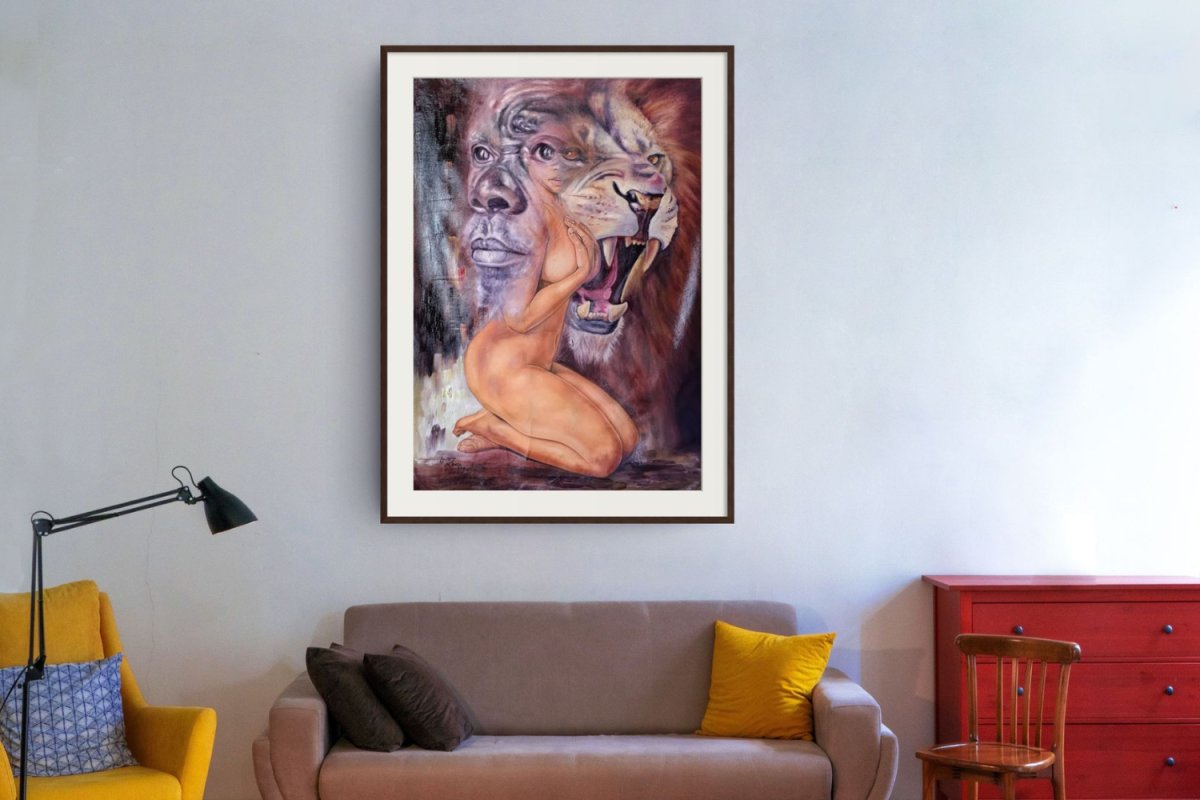
Did you know that the African contemporary art market surged by 340% between 2020 and 2024, signaling a profound shift in global collector interest? Acquiring an African painting original canvas is an act of cultural stewardship, yet the journey from a studio in Harare to a private collection in Zurich or Geneva requires more than just an eye for beauty. You likely seek the deep, tactile narratives that only an original work can provide, but the uncertainty of verifying provenance or the logistical stress of international transit often stands in the way of a confident purchase.
This guide promises to transform that hesitation into expertise, offering you the tools to distinguish between fleeting decor and investment-grade heritage. We'll examine the technical intricacies of canvas mediums, provide clarity on the documentation required for authentic collection building, and show you how to bridge the distance between Switzerland and Zimbabwe through immersive artist viewing rooms. By the end, you'll feel empowered to select a work that speaks to your soul while understanding its place within a sophisticated global portfolio.
Key Takeaways
- Understand why an African painting original canvas serves as a durable and high-impact medium for contemporary expression, offering a physical presence that far exceeds mass-produced alternatives.
- Learn to appreciate the tactile nuances of mixed media works where artists blend traditional canvas with organic materials like sand and textiles to create layered, evocative textures.
- Discover how to select the ideal canvas scale to dictate the emotional volume of your Swiss residence, whether you're seeking an intimate narrative or a bold, gallery-sized centerpiece.
- Gain confidence in verifying provenance and artistic merit by prioritizing Certificates of Authenticity and researching the career trajectories of emerging Zimbabwean talents.
- Explore how to bridge the gap between continents using the Artgal.Online Mobile App and virtual viewing rooms to experience authentic artworks before they arrive at your door.
The Allure of Original African Painting on Canvas
Embrace the transformative power of a medium that captures the heartbeat of a continent. For the discerning collector, an African painting original canvas represents much more than a decorative element; it's a profound testament to a living history that refuses to remain static. While traditional African art was once primarily associated with functional sculptures or pottery, the modern era has seen a brilliant pivot toward the canvas as a primary site for narrative exploration. This shift allows for a scale and durability that previous mediums often lacked, providing a sprawling stage for artists to confront complex themes of identity, resilience, and urban life with a clarity that resonates across borders.
Beyond Tradition: The Rise of the Canvas Medium
Observe how contemporary Zimbabwean painters are dismantling outdated global expectations by choosing the canvas as their voice. These creators use this versatile surface to communicate intricate social commentaries, blending local heritage with global artistic movements to create something entirely new. This evolution has fueled a significant surge in global demand for Contemporary African Art, as galleries from Basel to New York increasingly prioritize large-scale works that command attention and provoke dialogue. The canvas offers a permanence and a sense of aesthetic arrival that aligns perfectly with the Swiss preference for high-quality craftsmanship and artistic longevity, ensuring that these stories endure for generations within a private collection.
Investment Value of Original Works
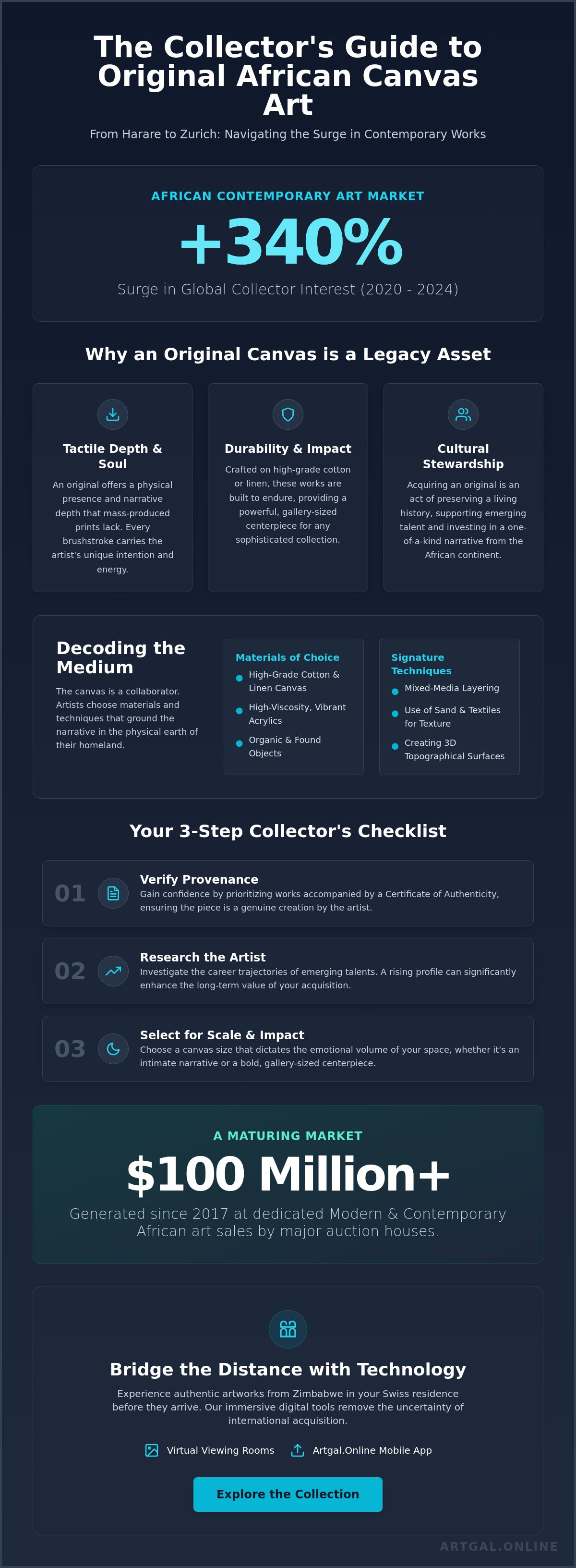
Value in the global art market is inherently tied to the singular, unrepeatable touch of the creator. While mass-produced prints might offer a visual echo of a piece, they lack the soul, the tactile depth, and the long-term financial potential of an African painting original canvas. In the Swiss market, where precision and authenticity are paramount, the distinction between a reproduction and an original is the difference between a fleeting trend and a legacy asset. Consider that dedicated sales of modern and contemporary African art at major auction houses have generated over $100 million since 2017, a clear indicator of the sector's robust health and maturation. This growth is driven by the undeniable rarity of a hand-painted work, where every brushstroke carries the artist's specific intention and emotional energy. Investing in an original piece isn't just about financial gain; it's about securing a one-of-a-kind narrative that holds its value even as the global market fluctuates, providing both spiritual enrichment and a stable entry point into a sector that grew by 340% between 2020 and 2024.
Decoding the 'Original Canvas': Materials, Textures, and Techniques
Observe the tactile surface of a masterwork and you'll realize that the canvas itself acts as a silent collaborator in the creative process. For top-tier Zimbabwean artists, selecting a high-grade, heavy-duty cotton or linen canvas is essential to ensure the work survives both the intense heat of a Harare studio and the cooler, more humid environments of a Swiss residence. When you acquire an African painting original canvas, you're not just buying a visual; you're securing a piece of physical craftsmanship designed to endure. The choice of substrate dictates how the paint sits, how the light reflects, and ultimately, how the narrative breathes within your space.
Many contemporary creators like Keith Zenda or Barry Lungu experiment with mixed media, weaving river sand, local textiles, or even found objects into the paint to ground the narrative in the physical earth of their homeland. This layering creates a three-dimensional topography that shifts as the sun moves across a room in Zurich or Geneva. The deliberate use of light and shadow isn't merely a technical choice; it's a way to breathe life into a two-dimensional plane, allowing the viewer to feel the heat of a Zimbabwean afternoon or the cool shade of a rural homestead. You can explore these intricate textures virtually through our Artist Viewing Rooms, which allow for a detailed inspection of every brushstroke before you make a selection.
The Materiality of Contemporary African Paint
Contemporary African artists frequently favor high-viscosity acrylics for their rapid drying times and vibrant color retention, though oils remain a prestigious choice for those seeking deep, blended gradients. To ensure these works remain stable when traveling to Switzerland, artists meticulously prime their surfaces with high-quality gesso, preventing the paint from cracking during the transition between disparate climates. In the context of African texture-heavy painting, impasto refers to the technique of laying on paint in thick, bold layers so that the strokes remain visible and provide a sculptural, three-dimensional quality to the African painting original canvas.
Narrative Techniques in Zimbabwean Painting
Color is never accidental; it's a language of its own. Deep ochres and burnt sienna might speak to rural heritage and the warmth of the soil, while neon flashes and metallic accents reflect the pulsing energy of Zimbabwe's urban centers. For artists like Florah Maphosa, the canvas is a site of celebration and reflection, where she utilizes the medium to deconstruct themes of gender and identity. These works often hide symbols within the layers of paint, requiring the viewer to slow down and engage with the piece as a unfolding story rather than a static image. This same dedication to narrative depth is what defines the luxury wearable art of Amaatra Creations, which transforms intuitive paintings into sophisticated fashion pieces like luxury vests.
Scale and Impact: Choosing the Right Canvas Size
Selecting the right dimensions for an African painting original canvas is an exercise in spatial curation that directly influences the emotional "volume" of your environment. Scale dictates the relationship between the viewer and the work; a miniature piece invites a quiet, whispered conversation in a private study, while a grand-scale masterpiece demands a bold dialogue with the architecture of a room. In the contemporary market, artists offer a spectrum from standard European sizes to bespoke, custom dimensions, allowing you to tailor the narrative impact to the specific proportions of your Swiss home or office.
Small to Medium Canvases: The Entry Point for Collectors
Consider starting your journey with small to medium-sized works, which often serve as an accessible entry point for those beginning to explore the depths of Zimbabwean creativity. These pieces allow for an incredible level of detail, as the artist works in close proximity to the substrate, creating an intimate experience for the viewer that rewards close inspection. A popular approach in Swiss interior design is the creation of a "gallery wall," where multiple original African canvases are curated together to tell a broader, multifaceted story of heritage and resilience. From a logistical perspective, smaller works are significantly easier to ship internationally, often arriving at your doorstep in Zurich or Basel with minimal complexity and lower insurance costs compared to their larger counterparts.
Large-Format Masterpieces: Making a Statement
Step into the world of large-format masterpieces when you wish to create an undeniable focal point in a luxury residence or a professional lobby. These oversized works present immense technical challenges for the artist, requiring specialized stretching techniques and a masterful command of composition over a vast surface area that can be physically demanding to paint. Because of their sheer presence, these paintings anchor modern architectural spaces, bridging the gap between minimalist lines and the warm, vibrant energy of African storytelling. It's vital to remember that any African painting original canvas exceeding 150cm in width or height requires a reinforced wooden stretcher bar with cross-bracing to prevent the frame from warping under the tension of the fabric over time. This structural integrity ensures the piece remains a legacy asset, preserving the artist's vision for decades.
Evaluating Authenticity and Artistic Merit
Begin your journey into serious collecting by looking past the surface of the pigment to the documentation that secures its future. For the discerning collector, a Certificate of Authenticity (COA) is the non-negotiable cornerstone of a secure acquisition. This document acts as the legal birth certificate of your African painting original canvas, detailing the artist's name, the year of creation, and the specific materials used. In the Swiss art market, where precision and transparency are cultural hallmarks, having a clear line of provenance ensures that your piece retains its investment value and can be insured or eventually resold with absolute confidence.
Cultivate a discerning eye by analyzing the "hand of the artist" to distinguish a true masterwork from a mere imitation. Every creator possesses a unique stylistic signature, whether it's a specific way they load a palette knife or a recurring motif hidden in the layers of the underpainting. Researching an artist's career trajectory is essential; look for participation in recognized international exhibitions or representation in established galleries. These milestones are reliable indicators of a maturing career and increasing market desirability, signaling that the work is part of a broader, respected narrative rather than a standalone decorative item.
Provenance and Documentation
Professional documentation must include more than just a title and a price. A comprehensive gallery invoice and COA should specify the exact dimensions, the medium, and a high-resolution image of the work for verification. Digital platforms are currently revolutionizing this process by providing secure, verified transaction histories. By utilizing Artist Viewing Rooms, you can bridge the geographical distance between Europe and Africa, establishing a direct visual link to the creator and their studio environment. This level of transparency eliminates the fear of purchasing mass-produced art and confirms that your acquisition is a legitimate piece of contemporary history.
Ethical Collecting: Supporting the Artist Directly
Ethical sourcing is the soul of modern curation. When you purchase through verified platforms that maintain direct relationships with creators, you're ensuring that a significant portion of the value remains within the Zimbabwean art communities that birthed the work. Fair trade practices in the contemporary scene aren't just about moral satisfaction; they're about professionalizing the sector and funding the resilience of the creators. Transparency in the supply chain matters because it preserves the cultural heritage of Zimbabwe while providing you with the peace of mind that your collection supports a sustainable and vibrant creative economy. This direct connection transforms a simple purchase into a meaningful act of cultural stewardship.
Your Gateway to Contemporary African Art: Artgal.Online
Step into a space where cultural discovery meets Swiss precision. Artgal.Online serves as a dedicated portal for those who appreciate the profound narratives of Zimbabwean creators, offering a seamless way to acquire an African painting original canvas without the logistical complexities often associated with international art acquisition. We act as a sophisticated cultural ambassador, carefully selecting works that reflect both artistic resilience and investment potential, ensuring that every piece in our collection carries a verified history and a soul-stirring story. Our platform is more than a digital storefront; it's an invitation to engage with a vibrant heritage that is currently redefining the global art market.
The Virtual Gallery Experience
Immerse yourself in our Virtual Art Exhibitions, designed to replicate the methodical, contemplative pace of wandering through a physical gallery in Basel or Zurich. Through the Artgal.Online Mobile App, you can utilize immersive technology to visualize how a specific work might transform your own living space, allowing the textures and colors to interact with your unique interior light and architectural lines. Our Artist Viewing Rooms provide an even deeper layer of connection, offering a rare glimpse into the creative sanctuaries where these original canvases are born. This digital intimacy allows you to witness the intentionality behind every brushstroke, bridging the gap between the artist's initial spark in Harare and your final curation in Switzerland.
Secure Global Shipping and Support
Entrust your collection to a team that understands the delicate nature of high-value international logistics. We manage the entire journey of your African painting original canvas, from the initial professional packing in Zimbabwe to the final delivery at your Swiss residence, navigating customs and insurance with the methodical care your investment deserves. Our expertise ensures that even the most delicate mixed-media works arrive in pristine condition, ready to be displayed. Whether you're a seasoned collector or just beginning to explore the vibrant world of contemporary African paintings and Original Shona Stone Sculptures, our personalized consultation service is here to support your journey. We believe that understanding the context of a work is essential to appreciating its beauty, and we're dedicated to providing the transparency you need to build a collection with confidence. Discover a world of authentic creativity and explore our curated collection of original African paintings today to find the next narrative masterpiece for your home.
Elevate Your Collection with Authentic Narratives
Your path to building a meaningful collection begins with an appreciation for the singular touch of the creator. We've explored how the choice of materials and the deliberate scale of an African painting original canvas can define the emotional atmosphere of a room while securing a piece of contemporary history. By prioritizing ethical sourcing and rigorous documentation, you're not just acquiring art; you're participating in a global movement of cultural preservation that supports the resilience of talented creators. As a Swiss-based gallery with deep roots in Harare and Gweru, we combine international shipping expertise with direct access to award-winning Zimbabwean artists. Experience our curated digital exhibitions and step into our virtual viewing rooms to find a work that resonates with your personal story. The right masterpiece is waiting to bring its vibrant energy into your home. Discover Original African Paintings on Artgal.Online
Frequently Asked Questions
How can I tell if an African painting on canvas is an original or a print?
Examine the surface of the work under a raking light to identify physical texture and depth. An African painting original canvas will exhibit raised brushstrokes, palette knife indentations, or mixed media elements like river sand that create a three-dimensional topography. Prints are perfectly flat and lack the rhythmic imperfections found in hand-painted works. You should also check the edges of the canvas for paint drips, which often indicate an authentic, manually created piece.
Does the size of the canvas significantly affect the art’s investment value?
Scale often influences the initial market price and the prestige of a work within a collection. Large-format canvases typically command higher values at major auctions because they represent a significant technical achievement and serve as architectural focal points. However, the artist's reputation and the work's provenance remain the primary drivers of long-term appreciation. A small, high-detail original can hold more value than a large piece if the artist's career trajectory shows sustained growth in global demand.
How do I care for and preserve an original canvas painting in different climates?
Protect your artwork by maintaining a stable environment away from direct sunlight and extreme temperature fluctuations. In Swiss homes, the air can become quite dry during the winter heating season, so using a humidifier helps prevent the canvas from becoming brittle. Ensure the piece is hung in a room with consistent humidity levels to protect the integrity of the paint layers. Artists often use high-quality gesso to prepare their surfaces, but professional framing adds an extra layer of protection against environmental stressors.
Is it safe to buy high-value original African art online?
What documentation should I expect when purchasing an original Zimbabwean painting?
Demand a formal Certificate of Authenticity (COA) signed by either the artist or the representing gallery. This document should include the work's title, dimensions, medium, and year of completion, alongside a high-resolution image of the painting. You should also receive a professional gallery invoice that serves as a record of the transaction. These documents are essential for insurance purposes and for establishing a clear line of provenance if you decide to resell the piece in the future.
Can I request a commission for a specific canvas size from an African artist?
Many contemporary Zimbabwean artists welcome commissions to create bespoke works tailored to specific architectural spaces. This collaborative process allows you to select a narrative theme and dimensions that perfectly complement your interior design. We facilitate these connections through our artist viewing rooms, ensuring that the final piece meets your aesthetic expectations while retaining the artist's unique creative voice. Custom works often become the most cherished items in a private collection due to their personal significance.
How does Artgal.Online support the artists featured in the gallery?
We maintain direct relationships with award-winning Zimbabwean creators to ensure they receive fair compensation for their work. By opening exhibition spaces in Harare and Gweru in 2026, we've strengthened our commitment to professionalizing the local art sector and providing artists with a global platform. Our model focuses on ethical sourcing and cultural stewardship, helping to build sustainable careers for emerging talents. This direct connection ensures that your purchase contributes to the continued growth of the African contemporary art scene.
What are the shipping costs for sending a large canvas painting from Switzerland?
Shipping costs are calculated based on the final dimensions, weight, and the specific insurance requirements of the artwork. Because large-scale canvases require specialized crating and climate-controlled handling, we provide personalized quotes for every international shipment. We utilize our expertise in Swiss logistics to ensure that high-value works are transported with the highest level of care. This bespoke approach guarantees that your investment arrives safely at your doorstep, regardless of its size or complexity.

Article by
Artgal.Online Editorial Team
The Artgal.Online Editorial Team works closely with artists, curators, researchers, and collectors to produce authoritative articles on contemporary African art, Zimbabwean culture, Shona sculpture, collecting, and exhibitions. Articles are reviewed in collaboration with the artists whenever possible to ensure authenticity and accuracy.
Disclaimer
The information presented in these articles, guides, infographics and educational resources is intended for general informational and educational purposes only. While every effort is made to ensure accuracy, completeness and relevance, Artgal.Online and its contributors do not guarantee that all information reflects the most current market conditions, auction results, valuations or scholarly opinions. Opinions expressed are those of the author and are provided to encourage appreciation, understanding and discussion of Zimbabwean and contemporary African art. This content should not be considered financial, legal, tax or investment advice. Readers are encouraged to conduct their own research and seek professional guidance where appropriate. References to artists, artworks, markets or collecting trends are intended for educational purposes and do not constitute a guarantee of future value or investment performance.


