
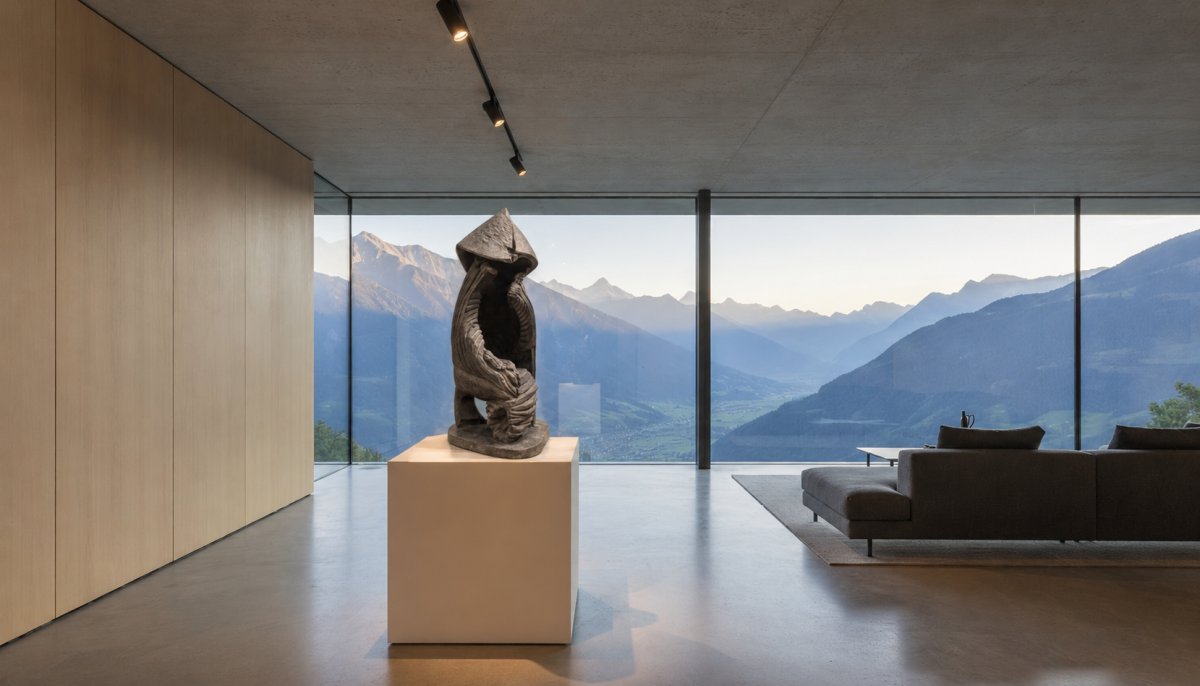
What if the silent, weighted presence of a stone carving isn't merely an object, but a narrative waiting for the right light to begin its story? Many collectors across Switzerland feel a profound connection to the spiritual depth of Zimbabwean art, yet they often face a quiet uncertainty regarding how to display Shona sculpture with the precision it deserves. You likely appreciate the tactile beauty of a polished Springstone or the earthy textures of Serpentine, but perhaps you worry about the structural integrity of your flooring or how the alpine light might shift across the stone's surface.
We believe that every masterpiece deserves a setting that honors its heritage while ensuring its physical safety. This guide offers a curator's perspective on transforming your private living space into a sophisticated gallery through intentional positioning and professional lighting techniques. You'll gain a clear understanding of the essential requirements for custom pedestals, the delicate balance of illuminating different mineral densities, and the practical steps needed to maintain the enduring value of your collection in any climate.
Key Takeaways
- Identify the distinct characteristics of stones like Serpentine and Springstone to find the natural orientation that honors the spirit of the artwork.
- Explore the nuances of directional and natural lighting to reveal the intricate carvings and tactile depth hidden within the stone's polished surfaces.
- Learn the structural requirements for bases and pedestals to ensure your heavy stone pieces are displayed with both elegance and absolute stability.
- Understand how to display Shona sculpture in varying environments, specifically addressing how to protect your investment from the Swiss freeze-thaw cycles.
- Discover how to use virtual viewing rooms and mobile applications to curate and visualize your collection within your home's unique architectural landscape.
Understanding the Material Presence of Shona Art
Begin your journey by acknowledging the physical weight of history. Shona sculptures aren't mere decorative objects; they are monumental witnesses to a cultural lineage that bridges the gap between the terrestrial and the divine. To truly master how to display Shona sculpture, you must first appreciate the geological soul of the medium. Artists typically work with Serpentine, a versatile stone found in the Great Dyke of Zimbabwe, offering a spectrum of colors from deep forest greens to rich, burnt oranges. For the most prestigious works, you'll encounter Springstone, an exceptionally hard variety that polishes to a high-gloss black finish, or Verdite, a rare green stone often reserved for intricate, smaller works due to its value and beauty.
The heritage of the Sculpture of Zimbabwe suggests that the artist doesn't simply impose a form upon the material. Instead, they believe in releasing a spirit already residing within the rock. This spiritual orientation is paramount when choosing a location in your home. Some pieces are "introverted," requiring a quiet corner where the shadows can pool in their carved recesses; others are "extroverted," demanding a central position where they can engage with the entire room. Observe the stone's natural grain and the direction of the artist's chisel marks; they often point toward the sculpture's intended dialogue with the space.
The Density and Weight of Zimbabwean Stone
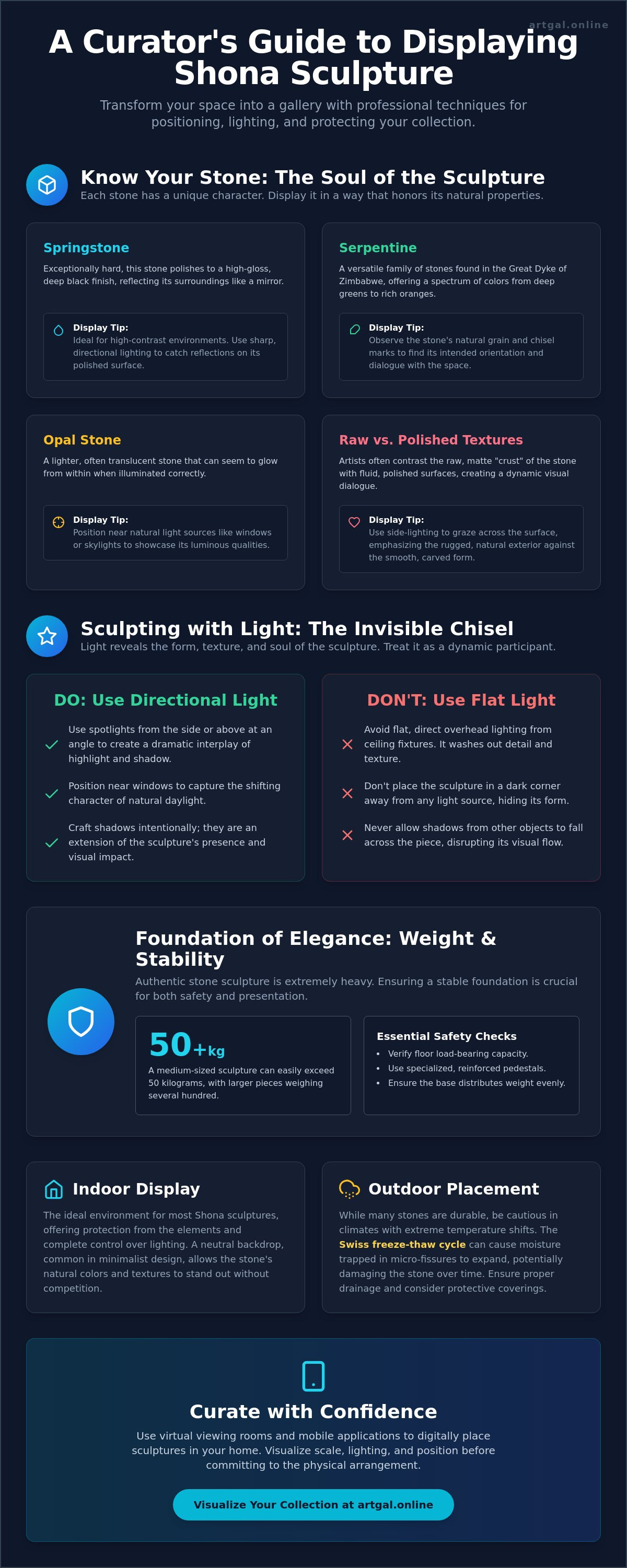
Zimbabwean stone is remarkably dense and heavy. While soft soapstone is common in mass-produced items, authentic gallery pieces utilize hard Serpentine or Springstone. This density translates to significant weight; a medium-sized sculpture can easily exceed 50 kilograms, while larger installations may surpass several hundred. When deciding how to display Shona sculpture in a Swiss residence, especially in historic buildings with parquet or timber joists, verify the floor's load-bearing capacity. High-density stones require specialized, reinforced pedestals to distribute weight safely and prevent structural strain.
Texture as a Narrative Element
The interplay between raw and polished surfaces creates a rhythmic dialogue within the stone. Many artists leave portions of the rock unworked, allowing the natural, matte "crust" to contrast with the fluid, waxed finish of the carved figure. These raw textures absorb light, creating deep shadows that anchor the piece. Conversely, polished surfaces reflect the room’s atmosphere, almost acting as a mirror. A neutral backdrop, common in Swiss minimalist design, provides the perfect canvas for these natural hues to shine without visual competition.
Consider these material characteristics when selecting your display area:
- Springstone: Best for high-contrast environments where its black, polished surface can catch sharp light.
- Opal Stone: Its lighter, translucent qualities benefit from being placed near natural light sources.
- Raw Textures: Position these where side-lighting can emphasize the rugged, natural exterior of the stone.
Sculpting with Light: Illuminating the Narrative
Light serves as the invisible chisel that completes a stone work. While the artist provides the form, the environment provides the revelation. When considering how to display Shona sculpture, you must treat light as a dynamic participant rather than a static utility. Flat, overhead lighting is the enemy of stone art; it washes out the subtle undulations of the carving and robs the piece of its three-dimensional soul. Instead, aim for directional illumination that creates a dialogue between highlight and shadow, allowing the viewer to discover new details as they move around the work.
Shadows are not merely the absence of light; they are an extension of the sculpture's presence. A well-placed spotlight can cast a silhouette against a neutral Swiss interior wall, effectively doubling the visual impact of the piece. This interplay is particularly vital for works with recessed areas or intricate negative space. By intentionally crafting these shadows, you invite the viewer into a rhythmic experience where the stone feels alive, shifting its expression as the day progresses.
Golden Hour and Natural Light Placement
Natural daylight is the most honest medium for stone. Position your sculpture near large windows or under skylights where it can bathe in the shifting Swiss alpine light. Shona artists typically finish their work with a hand-applied beeswax coating, which reacts beautifully to the warmth of the sun. However, be mindful of the intensity. Following an expert checklist for museum lighting reminds us that while side lighting is ideal for revealing texture, direct, unfiltered UV rays can eventually dull a wax finish over many years. Mirrors can be a sophisticated solution here, used discreetly to bounce soft, indirect light into the shadowed crevices of a Springstone or Serpentine figure without exposing it to harsh heat.
Artificial Lighting: Warmth vs. Precision
When the sun sets, artificial lighting takes over the task of curation. Select LED bulbs with a warm Kelvin temperature, typically around 3000K, to complement the earthy tones of Zimbabwean stone. Cooler lights can make the stone appear clinical and cold, stripping away the spiritual warmth inherent in the material. Professionals often use the "30-degree rule," where light hits the center of the piece at a 30-degree angle from the vertical to minimize glare while maximizing the depth of the carving. Dimmable track lighting offers the flexibility to adjust the mood, turning a bright daytime exhibition into an intimate evening sanctuary. To see how these lighting nuances might transform your own home, you can explore various arrangements through the Artgal.Online Mobile App, which helps you visualize the scale and presence of a piece before it even arrives.
Bases and Pedestals: Elevating the Sculpture’s Stature
A plinth serves as the essential boundary between the everyday world and the sacred space of the artwork. When you consider how to display Shona sculpture, the pedestal is not merely a piece of furniture; it is a structural necessity that provides both elevation and safety. Because Zimbabwean stone art often weighs between 20 and 200 kilograms, the foundation must be perfectly level and incredibly robust. A slight tilt in the floor or an uneven base can compromise the center of gravity, risking damage to the piece or the surrounding environment. For homes with high foot traffic or curious pets, applying a small amount of clear museum wax to the contact points can provide an invisible layer of security without altering the stone's finish.
The choice of a base also impacts the long-term preservation of the sculpture's aesthetic. While we often focus on the physical support, the way a pedestal interacts with ambient light is equally vital. Insights from the Getty Conservation Institute's guide to museum lighting emphasize that the height and material of a display stand can drastically change how light hits the stone's surface. A taller pedestal might bring the sculpture into the path of a direct spotlight, while a lower placement might leave it in a pool of soft, ambient shadow. Balancing these elements ensures that the sculpture remains the protagonist of the room.
Choosing the Right Pedestal Height
The "eye-level" rule typically suggests placing the center of the artwork approximately 1.5 meters from the floor. This creates an immediate, human-centric connection with the viewer. However, monumental Shona pieces often command more respect when placed directly on a reinforced floor or a very low, wide plinth. This grounded positioning mimics the natural landscape of Zimbabwe where the stone originated. If you're curating a collection, vary the heights of your pedestals to create a rhythmic visual dialogue, allowing the eye to wander through the space rather than fixing on a single horizontal line.
Material Harmony: Wood, Steel, or Stone?
The material of your pedestal should speak to the architecture of your home. Rustic, solid wood bases, such as oak or reclaimed timber, complement the organic origins of the art and add warmth to a room. When selecting a base to support several hundred kilograms of stone, it is essential to consider wood durability and hardness; experts like Bourbon Bigfoot Woodworking emphasize using the right timber species to ensure long-term structural stability. In contrast, industrial steel plinths offer a sleek, contemporary Swiss aesthetic that highlights the stone's timelessness through modern contrast. Avoid using hollow furniture or lightweight side tables. The sheer density of Shona stone requires a solid core; any vibration or instability in a hollow stand can lead to micro-cracks in the sculpture's base over time.
- Solid Wood: Best for Serpentine pieces with earthy, brown, or green tones.
- Powder-Coated Steel: Ideal for black Springstone to create a minimalist, gallery-style look.
- Stone Blocks: Creates a monolithic, unified appearance that feels carved from a single source.
Indoor vs. Outdoor: Balancing Environment and Longevity
Shona stone is inherently resilient, having spent millions of years forged in the Zimbabwean soil before being released by the artist's chisel. This elemental origin makes it a perfect candidate for the outdoor landscape, where the stone can breathe and interact with the elements. When you contemplate how to display Shona sculpture in a private garden or on a terrace, you're inviting the artwork to return to its roots. In the context of a Swiss garden, this transition from indoor sanctuary to the open air requires a thoughtful strategy to ensure the piece remains a legacy for generations.
The primary consideration for any outdoor installation in Switzerland is the freeze-thaw cycle. If water penetrates a micro-fissure in a porous stone and freezes, it expands by approximately 9%, creating internal pressure that can lead to fractures. While high-density stones like Springstone are naturally more resistant to this phenomenon, less dense varieties of Serpentine may require more vigilance. By elevating the sculpture on a proper plinth rather than placing it directly on damp soil, you prevent moisture from wicking up through the base and compromising the stone's integrity.
The Outdoor Gallery: Stone in Nature
Integrating a sculpture into a garden bed creates a profound dialogue between the permanence of the rock and the fleeting life of the foliage. Many collectors choose to let nature participate in the curation. Over time, moss and lichen may find a home on the unpolished, raw sections of the sculpture, adding a "living" patina that many find deeply spiritual. However, placement remains a practical matter; ensure the work is situated far from the path of heavy garden machinery or high-traffic areas where pets might accidentally cause a tip. A dedicated "Art Walk" through your landscape, with pieces positioned at key focal points, transforms a simple garden into a curated cultural experience.
For collectors looking to implement high-end sustainable lighting for their garden galleries, visit MacSell Solar Outlet to discover the type of specialized solar hardware required for reliable outdoor illumination.
Winter Care for Shona Sculptures
As the first frost approaches the Swiss plateau, a simple seasonal ritual will preserve the stone's luster. Inspect your sculptures for any standing water in recessed areas and clear it away. While many collectors choose to leave their pieces outdoors year-round, others prefer the peace of mind that comes with bringing smaller works inside during extreme alpine winters. If the piece remains outside, a fresh application of high-quality beeswax on a dry, sunny day acts as a vital protective shield against moisture and environmental pollutants. Don't leave the safety of your collection to chance; a little seasonal care ensures the stone's story continues to shine.
Ready to find the perfect piece for your garden sanctuary? Explore our current collection of Original Shona Stone Sculptures to discover works that thrive in both light and shadow.
Curating Your Personal Gallery with Artgal.Online
Curating a private collection is an act of storytelling that transcends mere home decoration. It's about creating a sanctuary where the stone's ancient heritage speaks directly to your own contemporary journey. When you contemplate how to display Shona sculpture, you aren't just placing a heavy object; you're orchestrating an emotional experience. Modern technology now allows this process to be as precise as it is inspired, bridging the geographic distance between the artist's workshop in Zimbabwe and your living space in Switzerland. By integrating digital tools with physical curation, you ensure that every piece finds its perfect resonance within your home's unique architecture.
The emotional impact of a sculpture is profoundly deepened when you understand the narrative behind the chisel marks. Knowing that a work represents a specific Shona proverb or a tribute to ancestral protection changes how you interact with it daily. This connection transforms the stone from a static item into a living presence. Whether you are a seasoned collector or just beginning your journey, the goal is to create a space that feels like a curated exhibition, reflecting both the resilience of the creators and your own sophisticated aesthetic.
Digital Tools for the Modern Collector
The Artgal.Online Mobile App serves as your digital curator, offering a sophisticated way to preview how a specific work interacts with your environment. Through the app's augmented reality features, you can experiment with virtual placement, testing how different scales and stone types look against your walls before the physical piece ever arrives. You don't have to guess how a dark Springstone figure will command a sunlit corner or how a delicate Serpentine work will fit on a specific mantle. Our platform also provides access to Virtual Art Exhibitions and Artist Viewing Rooms, where you can observe professional display techniques and gain inspiration from curated digital settings. If you require more specific guidance, you can connect with Artgal experts for personalized curation advice tailored to the light and structural requirements of Swiss interiors.
Building a Narrative Collection
- Thematic Grouping: Arrange pieces by the same artist to showcase the evolution of their style.
- Mixed Media: Use the contrast between stone and canvas to define different zones in a large room.
- Storytelling: Place sculptures with protective themes near entryways to honor traditional Shona customs.
Transforming Your Space into a Living Gallery
Your journey into Shona stone art begins with a single piece but evolves through the intentional orchestration of light, shadow, and structural support. By balancing the raw physical presence of the stone with the delicate play of alpine light and the security of a professional base, you create a sanctuary that honors both the artist and the earth. Mastering the art of how to display Shona sculpture ensures that these spiritual narratives remain vibrant and safe, whether they reside in your private garden or a minimalist Swiss interior. Proper seasonal care and a thoughtful understanding of the stone’s density will protect the provenance and value of your collection for years to come.
At Artgal.Online, we bridge the gap between Zimbabwean heritage and Swiss precision, offering professional curation and secure international shipping for every high-value work. Our sculptures are sourced directly from the artists, ensuring authenticity and a meaningful connection to the creative process. We invite you to Explore our curated collection of Original Shona Stone Sculptures and begin curating a home that reflects a world of cultural discovery. Let your space become a testament to the enduring power of stone.
Frequently Asked Questions
How do I clean and maintain the shine on my Shona sculpture?
Maintain the luster of your artwork by using a clean, soft cloth to remove dust, followed by a light application of clear beeswax once a year. Avoid household detergents or acidic cleaners, as these can strip the stone's protective finish and dull its natural color. If the stone appears dry, gently warming the surface with a hairdryer before applying the wax helps the material absorb the nourishment more deeply.
Can Shona sculptures stay outside during a cold winter?
High-density stones like Springstone can remain outdoors during a Swiss winter, provided they are properly waxed and elevated on a plinth. For more porous varieties of Serpentine, we recommend moving the piece into a sheltered area or bringing it indoors to avoid the pressure of the freeze-thaw cycle. This meticulous care ensures the internal structure of the stone remains intact despite the sub-zero temperatures.
What is the best way to move a heavy stone sculpture safely?
Always lift a sculpture from its base and never by a protruding limb or a narrow neck, as these are the most vulnerable points of the carving. For heavier pieces, use a professional dolly with thick padding or enlist a second person to ensure the weight is distributed evenly. Meticulous handling prevents both physical injury and accidental chips to the stone's polished surface.
Does direct sunlight damage Shona stone carvings?
Stone carvings are naturally light-fast, but prolonged exposure to direct UV rays can eventually evaporate the wax finish that provides the stone's deep glow. When you are deciding how to display Shona sculpture in a sunlit room, simply plan for a biannual re-waxing ritual to maintain its brilliance. This small act of curation preserves the contrast between the polished and raw textures of the work.
How do I know if my floor can support a large stone sculpture?
Consult with a structural engineer if you intend to place a piece exceeding 100 kilograms in a historic Swiss building with timber joists. For most modern apartments, the concrete subflooring is more than sufficient for medium-sized works. Placing the sculpture near a load-bearing wall or directly over a floor joist provides the most secure foundation for your heavier acquisitions.
What type of lighting best highlights the texture of Zimbabwean stone?
Warm LED spotlights with a color temperature of 3000K are ideal for bringing out the rich, earthy tones of Zimbabwean stone. Position the light source to hit the piece from the side rather than directly from above; this creates the necessary shadows to reveal the sculpture's three-dimensional form. This technique is a fundamental part of how to display Shona sculpture with gallery-level sophistication.
Should I use a pedestal for all my Shona sculptures?
Pedestals are excellent for bringing smaller, intricate works to eye level, but they aren't a universal requirement for every piece. Monumental sculptures often possess a more powerful, grounded presence when displayed on a low, reinforced plinth or directly on the floor. Choose the elevation that best honors the sculpture's spirit and allows it to breathe within the architectural context of the room.
How do I prevent my sculpture from tipping over?
Ensure your display surface is perfectly level and use a small amount of clear museum wax on the base to create a secure bond with the pedestal. For very tall or top-heavy pieces, you might consider a discreet mechanical tether or a custom-made base with a wider footprint. These subtle safety measures offer peace of mind, especially in homes with high activity or curious pets.

Article by
Artgal.Online Editorial Team
The Artgal.Online Editorial Team works closely with artists, curators, researchers, and collectors to produce authoritative articles on contemporary African art, Zimbabwean culture, Shona sculpture, collecting, and exhibitions. Articles are reviewed in collaboration with the artists whenever possible to ensure authenticity and accuracy.
Disclaimer
The information presented in these articles, guides, infographics and educational resources is intended for general informational and educational purposes only. While every effort is made to ensure accuracy, completeness and relevance, Artgal.Online and its contributors do not guarantee that all information reflects the most current market conditions, auction results, valuations or scholarly opinions. Opinions expressed are those of the author and are provided to encourage appreciation, understanding and discussion of Zimbabwean and contemporary African art. This content should not be considered financial, legal, tax or investment advice. Readers are encouraged to conduct their own research and seek professional guidance where appropriate. References to artists, artworks, markets or collecting trends are intended for educational purposes and do not constitute a guarantee of future value or investment performance.


