
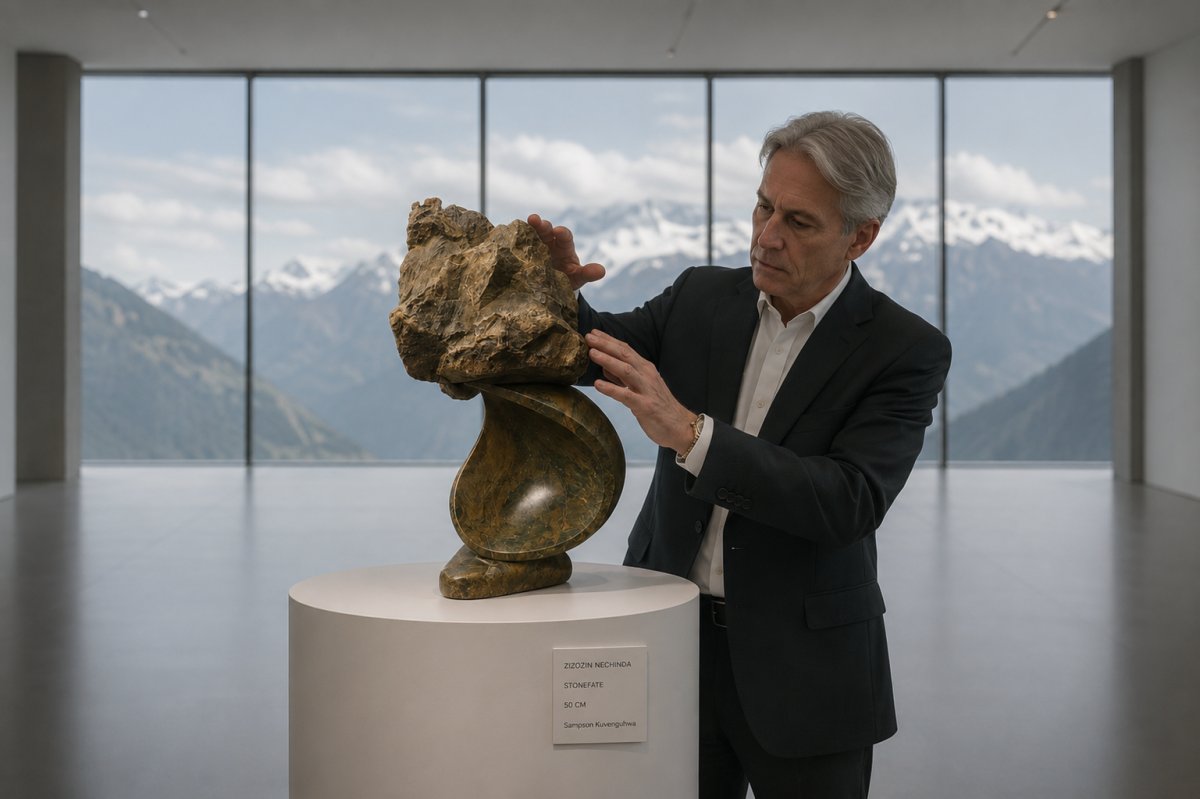
A genuine Shona sculpture is far more than a decorative object; it is a profound dialogue between the artist's hand and the ancient geological heritage of Zimbabwe. You likely feel the magnetic pull of these stone masterpieces, yet the quiet fear of accidentally acquiring "airport art" or a mass-produced imitation often clouds the excitement of a new discovery. It's natural to feel a sense of hesitation when faced with varying stone qualities or a lack of clear history for a piece that truly speaks to your soul. This guide invites you to master how to verify Shona sculpture authenticity by decoding physical evidence, tracing provenance, and honoring the human element behind every stroke of the chisel.
Explore the intricate details of hand-carved serpentine and springstone as we provide a definitive checklist for your next physical inspection. You'll gain the professional confidence to distinguish intentional artistry from commercial replicas while learning how a formal certificate of authenticity secures your cultural investment. From understanding the latest ZIMRA export documentation to appreciating the spiritual depth of the artist's narrative, we'll ensure your collection reflects the true brilliance and resilience of contemporary African heritage.
Key Takeaways
- Learn why a genuine piece is a unique dialogue between stone and spirit, representing a hand-carved legacy that far exceeds the value of factory-made replicas.
- Develop a collector's eye for physical markers by using the tap test and examining tool marks on rare stones such as Springstone and Verdite.
- Master how to verify Shona sculpture authenticity through a rigorous review of provenance and the essential components of a legitimate Certificate of Authenticity.
- Identify the warning signs of airport art and mass-production to ensure your acquisition remains a significant and respected cultural investment.
- Discover how the Artgal.Online mobile app streamlines the verification process by providing direct digital access to artist biographies and curated collection histories.
What is Shona Sculpture Authenticity and Why Does It Matter?
The Distinction Between Original Art and Souvenirs
The Role of the Artist's Reputation
The history of Shona sculpture is defined by three distinct generations of artists, each building upon the resilience and creativity of their predecessors. From the early masters of the 1960s to the innovative voices of today, an artist's signature style serves as a primary mark of truth. Knowing how to verify Shona sculpture authenticity involves researching these lineages and recognizing the specific hand of the carver. This careful curation ensures your collection supports genuine talent and preserves the integrity of this globally respected movement.
Physical Markers: How to Read the Stone and Tool Marks
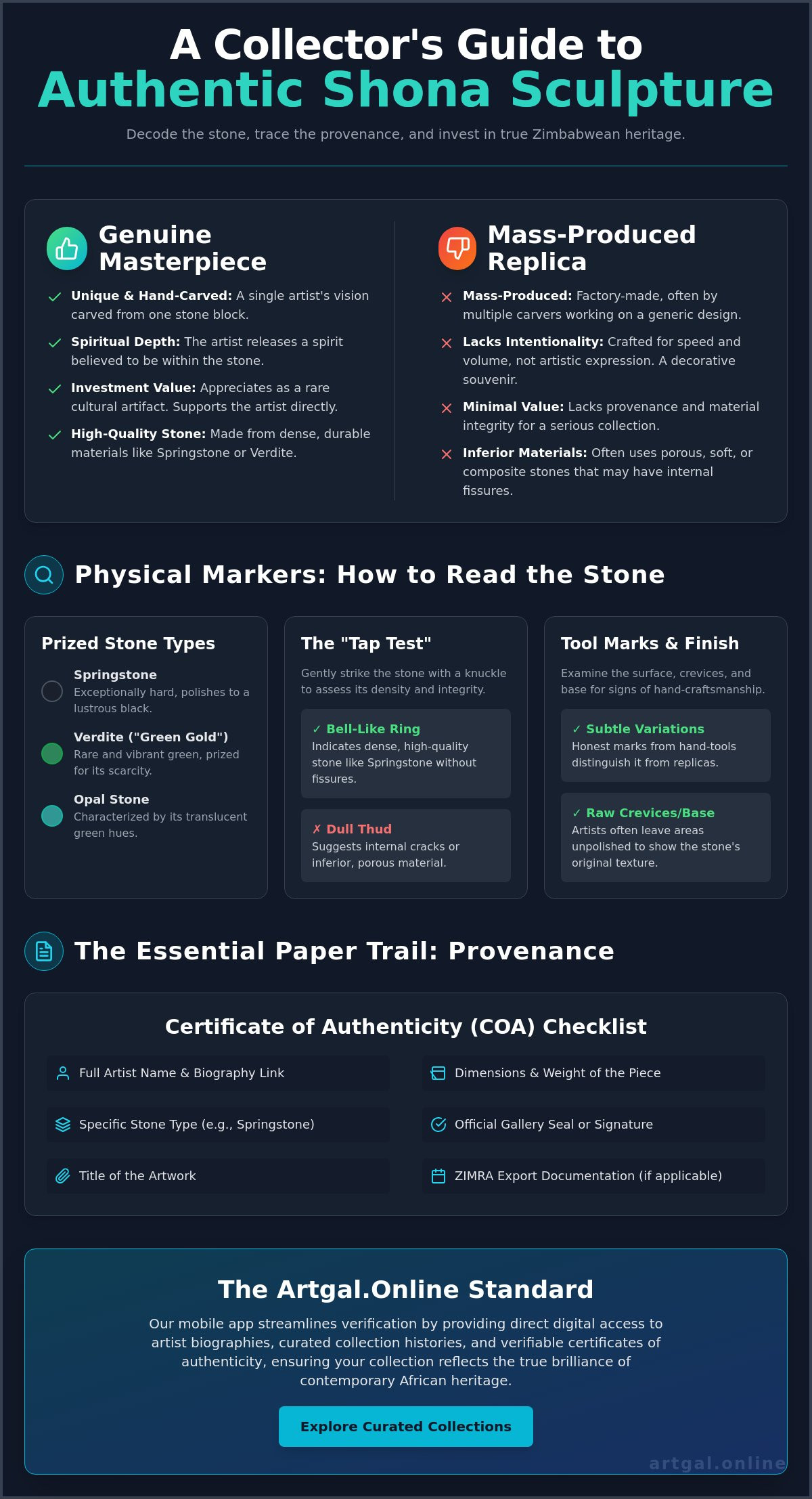
To truly understand how to verify Shona sculpture authenticity, one must move beyond visual appreciation and engage with the material's physical reality. The stone itself carries a signature of its origin. Master carvers in Zimbabwe primarily work with various forms of Serpentine, a stone known for its diverse color palette and remarkable durability. Within this category, you will find Springstone, an exceptionally hard, high-density stone that polishes to a deep, lustrous black. Other prized materials include Opal stone, characterized by its translucent green hues, and the rare Verdite, often called "green gold" due to its vibrant color and scarcity. Each material demands a specific level of mastery, and the choice of stone often reflects the artist's standing and intent.
Perform a "tap test" to assess the structural integrity of a piece. When you gently strike a dense stone like Springstone with a knuckle, it should produce a clear, bell-like ring. A dull thud can indicate internal fissures or the use of inferior, porous materials often found in mass-produced imitations. This tactile investigation is a fundamental step in evaluating authenticity in African art, as it reveals the density and geological history of the medium. Inspect the crevices and the base of the sculpture; genuine works often leave these areas in a "raw" state, showing the original texture of the stone to create a beautiful contrast with the polished surfaces.
The Finishing Touch: Polishing and Waxing Techniques
Authentic Shona masterpieces achieve their glow through a labor-intensive process of heating the stone and applying multiple layers of natural wax. This method preserves the stone's breathability and enhances its natural grain. Be wary of pieces that feel sticky or appear overly glossy in a uniform, plastic-like manner. These are often signs of synthetic resins or paints used to mask cracks or low-quality stone. In a high-end Swiss gallery setting, the finish should feel smooth and organic, never artificial.
Identifying the Artist's Hand
Look closely at the unpolished areas for the rhythmic, slightly irregular marks of a hand-held chisel. Machine-made "airport art" often displays perfectly parallel grooves or uniform sanding marks that lack the "chatter" of manual labor. The artist's signature should be etched directly into the stone, appearing as an integral part of the work rather than a shallow afterthought. Master carvers often embrace the natural irregularities of the stone, turning a vein or a rough patch into a focal point of the narrative. To see these details up close, you can explore the Artgal.Online mobile app, which offers high-resolution views of original works from our curated collection.
The Essential Paper Trail: Provenance and Documentation
Trace the lineage of your acquisition to unveil its true narrative and cultural significance. In the world of high-end collecting, provenance serves as the chronological record of a work's history, confirming its journey from the artist's studio to your gallery space. When you explore how to verify Shona sculpture authenticity, you must look beyond the stone's surface to the documents that support its claim to greatness. A robust paper trail is your strongest defense against the ambiguity often found in the secondary market. It transforms a beautiful object into a documented masterpiece with a clear, undeniable origin.
A credible gallery provides an exhaustive history that includes artist biographies and past exhibition records. These details don't just add flavor; they provide the context necessary for seeking authenticity in African art. This documentation is a vital part of learning how to verify Shona sculpture authenticity in a complex global market. In 2026, verification also involves checking for legal compliance. For instance, any sculpture classified as a national monument requires an export permit from Zimbabwe's National Museums and Monuments. Additionally, since the ZIMRA updates in early 2025, legitimate exporters must provide double-stamped consignment notes as proof of loading. If a dealer cannot produce evidence of these legal pathways, the work's origin remains questionable.
The Anatomy of a Valid Certificate of Authenticity
A Certificate of Authenticity (COA) is only as reliable as the information it contains. A valid document should act as a detailed passport for the artwork, providing specific data that links the paper to the stone. Ensure your COA includes these non-negotiable elements:
- Artist Identity: The full name and, ideally, a brief biography or portrait of the carver.
- Material Specifics: The exact stone type, such as Springstone, Serpentine, or Verdite.
- Physical Dimensions: Accurate height, width, and weight measurements to prevent substitution.
- Visual Proof: High-resolution photographs showing the piece from multiple angles.
- Validation: An authorized signature from the gallery director or the artist themselves.
Verifying the Sourcing Chain
Direct-from-artist sourcing remains the gold standard for any serious collector. By maintaining a transparent chain of custody, Swiss-based platforms like Artgal.Online offer a level of legal security that is often missing from casual marketplaces. This connection ensures that the stone's journey, from the initial quarrying in Zimbabwe to its arrival in Switzerland, is fully documented. When a gallery can tell you exactly which community the carver belongs to and how the piece was transported, you're not just buying art; you're preserving a legacy. This level of transparency justifies the investment, which can range from hundreds to several thousand CHF, by guaranteeing that your piece is a verified original.
Avoiding Common Pitfalls: How to Spot 'Airport Art' Fakes
It's a common dilemma for the aspiring collector: you find a piece that looks remarkably like a gallery-grade masterwork but carries a price tag that feels like a bargain. This is the primary hurdle in learning how to verify Shona sculpture authenticity. The market is often flooded with "airport art," a term used for mass-produced carvings created for the quick tourist trade. These pieces lack the spiritual intentionality of a genuine work, as they're often the result of an assembly line where multiple carvers replicate a single, generic design. Instead of a unique dialogue with the stone, you're looking at a repetitive cliché, such as stylized family groups or animals that appear identical across dozens of market stalls.
One of the most immediate "tells" of a fake is the material itself. Authentic Shona art utilizes durable, high-density stones like Serpentine or Springstone. In contrast, many imitations use soapstone, a significantly softer material that can be scratched with a simple fingernail. These soft-stone replicas are heavy but brittle, lacking the structural integrity required for a lasting investment. When you investigate how to verify Shona sculpture authenticity, always prioritize the material's hardness and the complexity of the themes. A master carver rarely spends weeks on a generic subject; they choose stone that challenges their skill and rewards the viewer with intricate, non-repeating details.
Price as a Proxy for Authenticity
A price that seems too good to be true usually is. In the Swiss market, the cost of a verified sculpture reflects the true expense of ethical artist compensation, professional curation, and the logistical realities of international transport. Shipping a significant stone work from Zimbabwe can range from approximately 45 CHF to 270 CHF, depending on weight and insurance. When you add the mandatory ZIMRA export documentation and the specialized packing required to protect these masterpieces, a "bargain" price becomes a clear red flag. Paying for the curation of a reputable gallery ensures that every CHF supports the artist's legacy and secures your own cultural portfolio.
The 'Soul-less' Symmetry of Machine Production
Genuine Shona art follows the natural, often irregular shape of the raw stone, resulting in a piece that feels organic and alive. Machine-produced fakes often exhibit a soul-less symmetry that feels sterile. Perform a "front and back" inspection on every piece you consider. In a workshop replica, the artist often focuses solely on the front, leaving the back flat or poorly finished. A true masterpiece is a three-dimensional journey where the artistry continues all the way around, showing consistent tool marks and intentionality from every angle. To ensure you are investing in a verified, hand-carved original, explore the collection on the Artgal.Online mobile app and connect with the true spirit of Zimbabwean stone.
The Artgal.Online Standard: Curated Authenticity in Switzerland
Artgal.Online stands as a dedicated guardian of cultural integrity, offering a sanctuary for those who appreciate the profound depth of Zimbabwean artistry. Our commitment to original Shona stone sculptures is rooted in a deep respect for the carvers' heritage and the geological history of the stone itself. By choosing a Switzerland-based platform, you benefit from the rigorous standards of a local entity that understands both the global art market and the specific needs of Swiss collectors. This local presence provides an essential layer of legal security, ensuring that every transaction is governed by the transparency and reliability you expect from a high-end gallery.
Direct Sourcing and Artist Empowerment
We maintain direct relationships with master carvers and emerging talents across Zimbabwe to ensure 100% authenticity for every piece in our collection. This sourcing model bypasses the anonymous workshops where mass-produced imitations are born, ensuring that the proceeds of your investment directly support the livelihoods and cultural traditions of the creators. Through our digital platform, you're invited to see the artist's process, witnessing the transformation of raw stone into a finished masterpiece. This transparency is a vital tool in learning how to verify Shona sculpture authenticity, as it provides undeniable proof of the human hand at work and the intentionality behind every stroke.
A Curated Experience for the Modern Collector
Experience the collection through our virtual art exhibitions, where high-resolution technology allows you to inspect every chisel mark and stone vein in exquisite detail before making a decision. For those who value a tactile connection, our physical viewing rooms in Switzerland provide the perfect environment for personal verification and quiet contemplation. This hybrid approach ensures you can invest with absolute confidence, knowing that your piece has been vetted for material integrity and artistic power. Explore our authenticated collection of Shona stone sculptures today and find a work that resonates with your own story and values.
Securing Your Cultural Legacy in Stone
Building a collection of Zimbabwean art is a journey of discovery that rewards those who look beneath the surface. By mastering how to verify Shona sculpture authenticity, you've gained the tools to distinguish between a soul-less replica and a hand-carved masterpiece. You now understand that a bell-like ring from a tap test and the presence of intricate, hand-tooled textures are the true hallmarks of a master's touch. Beyond the physical, you recognize that valid provenance and rigorous legal documentation are the pillars of a secure investment in the 2026 market.
Discover Authentic Shona Masterpieces on the Artgal.Online App and explore a curated world where direct-from-artist sourcing meets the security of a Swiss-registered gallery. Every piece we offer comes with detailed provenance documentation, ensuring your acquisition is a verified original that preserves the artist's legacy and your financial peace of mind. Your commitment to authenticity honors the resilience of the Shona people and ensures your home becomes a gallery for stories that truly matter. Let your intuition be guided by expertise, and your collection will grow with pieces that resonate for generations.
Frequently Asked Questions
How can I tell if a Shona sculpture signature is authentic?
An authentic signature is etched directly into the stone's surface, appearing as a deliberate part of the artist's final process. It shouldn't look like a faint, shallow scratch or a surface-level addition made after the polishing phase. When learning how to verify Shona sculpture authenticity, you should examine the depth and style of the signature to ensure it matches the artist's known hand and the piece's overall texture.
Does the type of stone used affect the authenticity of the piece?
The choice of material is a critical indicator of a work's origin and quality. Genuine Shona masterpieces are carved from durable, high-density stones like Springstone, Serpentine, or the rare Verdite. These materials require significant labor and specialized hand tools. If a piece is made from soft Soapstone, which is easily scratched with a fingernail, it's likely a mass-produced souvenir rather than a gallery-grade investment intended to last for generations.
What exactly is 'airport art' in the context of Zimbabwean sculpture?
"Airport art" refers to carvings produced in high-volume workshops specifically for the tourist market. These pieces often feature repetitive, cliché themes and lack the individual creative spirit found in original works. They're typically made using power tools for speed, resulting in a sterile symmetry. Recognizing these workshop models is essential when you want to understand how to verify Shona sculpture authenticity and avoid acquiring soul-less, commercial replicas.
Is a certificate of authenticity legally binding for art investments?
In the Swiss art market, a Certificate of Authenticity acts as a vital document that supports the legal and financial standing of your investment. While its status can vary by jurisdiction, it serves as a formal representation of the work's provenance and material integrity. This document is indispensable for insurance purposes and future resale, providing the necessary paper trail that confirms you own a verified original rather than a workshop imitation.
Can I verify a Shona sculpture if I don't know the artist's name?
You can often assess a piece's quality through physical markers like stone density and tool marks even if the artist remains anonymous. However, the absence of a name can impact the work's long-term investment value. Many talented community carvers create beautiful, authentic works that lack a global reputation. In these cases, the integrity of the gallery's sourcing chain becomes the most reliable indicator of the sculpture's true Zimbabwean heritage.
Why is genuine Shona stone sculpture more expensive than other African carvings?
The higher price reflects the extreme hardness of the stone and the hundreds of hours required for traditional hand-carving. Unlike softer wood or clay works, stones like Springstone demand immense physical effort and artistic patience. Additionally, ethical sourcing from Zimbabwe and the logistical costs of shipping heavy stone to Switzerland contribute to the final value. A genuine piece represents a significant cultural investment that supports the artist's resilient creative journey.
How do I care for my authentic stone sculpture to preserve its value?
Preserving the value of your stone sculpture requires minimal but consistent care. Dust the surface regularly with a soft, dry cloth to prevent buildup in the intricate crevices. If the luster begins to fade after several years, you can gently apply a thin layer of clear natural beeswax. This process mirrors the artist's original finishing technique, protecting the stone's breathability and maintaining the deep, organic glow that defines high-quality Shona art.
What should I do if I suspect my sculpture is a mass-produced imitation?
If you suspect a piece is an imitation, begin by performing the tap test and inspecting it for machine-made symmetry. Look for uniform grooves that suggest power tools rather than the rhythmic chatter of a hand-held chisel. Your next step should be to consult a professional gallery or use a platform like the Artgal.Online app for a comparative analysis. A professional appraisal can provide the clarity needed to secure your collection's integrity.

Article by
Artgal.Online Editorial Team
The Artgal.Online Editorial Team works closely with artists, curators, researchers, and collectors to produce authoritative articles on contemporary African art, Zimbabwean culture, Shona sculpture, collecting, and exhibitions. Articles are reviewed in collaboration with the artists whenever possible to ensure authenticity and accuracy.
Disclaimer
The information presented in these articles, guides, infographics and educational resources is intended for general informational and educational purposes only. While every effort is made to ensure accuracy, completeness and relevance, Artgal.Online and its contributors do not guarantee that all information reflects the most current market conditions, auction results, valuations or scholarly opinions. Opinions expressed are those of the author and are provided to encourage appreciation, understanding and discussion of Zimbabwean and contemporary African art. This content should not be considered financial, legal, tax or investment advice. Readers are encouraged to conduct their own research and seek professional guidance where appropriate. References to artists, artworks, markets or collecting trends are intended for educational purposes and do not constitute a guarantee of future value or investment performance.


