

To a Shona master, the surface of a serpentine stone is not merely a boundary, it's a living skin that breathes with the spirit of the work. You've likely felt that same deep connection when first touching your piece, perhaps followed by a quiet sense of hesitation as you wonder how to maintain that ethereal radiance. It's natural to feel protective of such a significant investment, especially when faced with the fear of accidental scratches or the gradual dullness that can settle over a neglected surface. Understanding how to clean Shona sculpture is less about chores and more about a ritual of preservation that honors the artist's original intent.
You'll soon master the professional techniques used by Zimbabwean masters to maintain, wax, and restore the eternal beauty of your stone treasures. We'll guide you through the traditional three-step polishing process, the safe handling of minor imperfections, and the specific natural waxes that create a pristine, skin-like glow. By the end of this journey, you'll have the confidence to care for your collection with the precision of a gallery curator and the soul of a true storyteller who values the heritage behind every curve.
Key Takeaways
- Learn the daily rituals of tactile connection, using soft microfiber cloths to prevent dust buildup while allowing the natural oils of your hands to enhance the stone's luster.
- Master the traditional techniques on how to clean Shona sculpture by identifying when a finish becomes tired and applying natural clear beeswax to restore its deep, luminous glow.
- Discover the professional wet-sanding method for addressing surface scuffs, utilizing a specific progression of sandpaper grits to maintain the structural integrity of precious stones like Springstone.
- Gain insight into the three-step polishing process used by masters like Sampson Kuvenguhwa, ensuring your preservation efforts align with the authentic heritage of Zimbabwean artistry.
- Understand the physical nuances of handling substantial serpentine pieces, ensuring that your maintenance routine protects both the delicate wax skin and the heavy stone itself.
Daily Maintenance and the Art of Tactile Connection
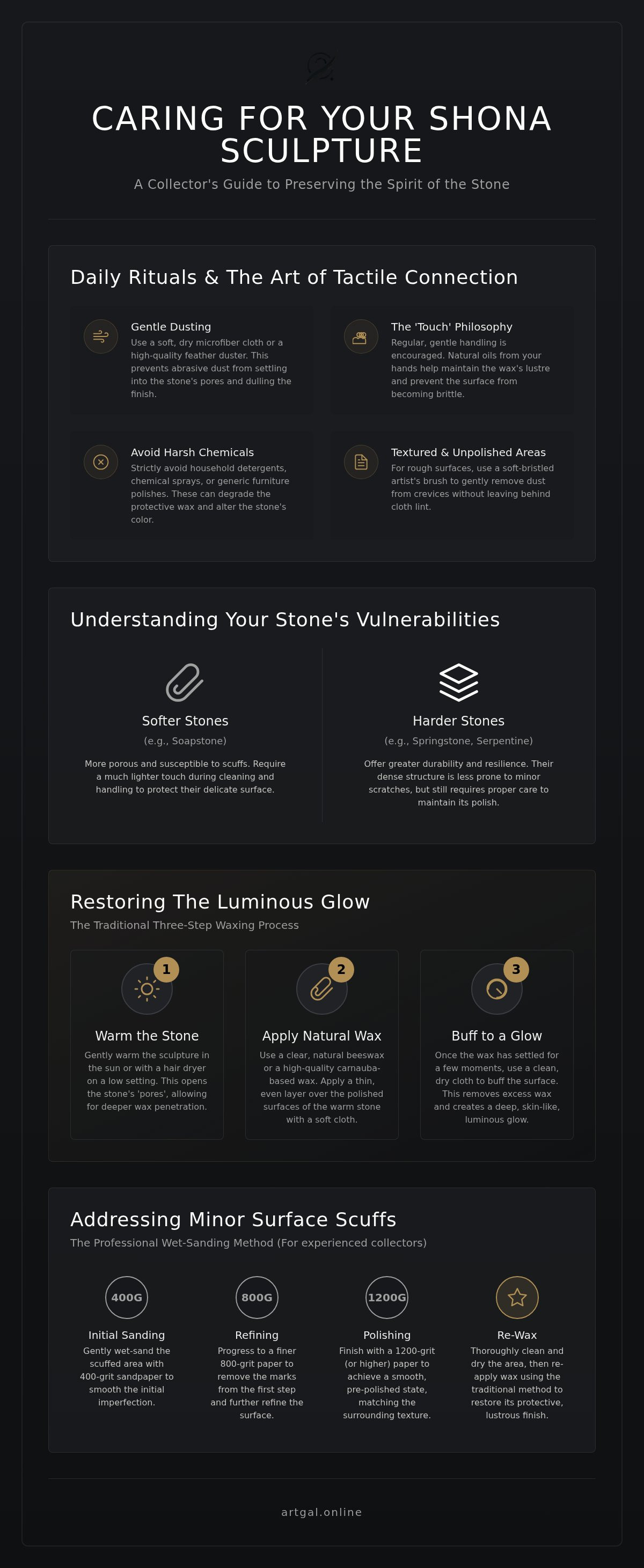
Begin your journey as a collector by embracing the meditative rhythm of daily care. While the stone itself is ancient and enduring, the luminous finish that defines its beauty requires a gentle, consistent touch. For routine dusting, select a soft, dry microfibre cloth or a high-quality feather duster to lift away particulate buildup without disturbing the delicate wax skin. This simple act prevents abrasive dust from settling into the stone's pores, ensuring that the original brilliance intended by the artist remains unclouded. When considering how to clean Shona sculpture, remember that the most effective maintenance is often the least intrusive. To find high-quality cleaning tools and home care products for your collection, learn more about Apollo store.
Incorporate the 'Touch' Philosophy into your preservation routine. Unlike many western art forms that demand a hands-off approach, Shona works often invite physical interaction. Regular, gentle handling actually contributes to the sculpture's health, as the natural oils from your palms help maintain the wax's lustre and prevent the surface from becoming brittle. This tactile connection creates a living dialogue between the collector and the work, mirroring the intimate relationship the artist shared with the stone during its creation.
Be mindful of where your piece resides within your home. Sculptures kept in climate-controlled indoor environments require far less frequent deep cleaning than those exposed to direct sunlight or fluctuating humidity, which can accelerate the oxidation of the wax. To protect this vital barrier, strictly avoid using household detergents, chemical sprays, or generic furniture polishes. These substances often contain acidic components that degrade the protective wax and can permanently alter the stone's natural hue.
Handling Textured and Unpolished Surfaces
Specialized styles, such as the 'Dry Tree' technique pioneered by masters like Sampson Kuvenguhwa, require a nuanced approach. These pieces often feature rough, unpolished sections that contrast with smooth, waxed areas. To clean these textured surfaces without leaving behind unsightly cloth lint, use a soft-bristled artist's brush. This tool allows you to reach deep into intricate carvings and crevices where dust tends to accumulate, preserving the raw, organic aesthetic of the work without compromising its integrity.
Identifying Stone Vulnerabilities
The specific mineral composition of your piece dictates its care requirements. Softer stones like Soapstone are more porous and susceptible to surface scuffs, requiring a lighter touch during cleaning. In contrast, harder minerals such as Springstone or Black Serpentine offer greater durability. Understanding the origins of Zimbabwean art is essential for any collector, as the geological diversity of the Great Dyke informs the physical presence of each work. By recognizing these differences, you honor the heritage of the Sculpture of Zimbabwe and ensure that the spirit of the stone remains vibrant for generations.
Restoring the Luminous Glow: The Traditional Waxing Process
Time eventually whispers to the surface of the stone, signaling a need for renewal. You might notice your piece taking on a 'tired' appearance or developing a faint, white-ish oxidation that masks its original depth. While daily dusting preserves the exterior, mastering how to clean Shona sculpture at a deeper level involves the periodic application of high-quality wax. This ritual does more than add shine; it creates a protective barrier that seals the stone's spirit and maintains its luminous clarity against the passage of years.
Selecting the right medium is the first step in this curatorial journey. Professionals generally favor clear beeswax or high-quality carnauba-based furniture wax. Pure yellow beeswax, typically found in 200-gram bars or larger blocks, provides a natural, warm finish that bonds harmoniously with the mineral structure of the serpentine. The stone must be warm. By placing the sculpture in the gentle heat of the sun or using a hair dryer on a low setting, you 'open the pores' of the stone. This thermal preparation allows the wax to penetrate the surface rather than simply sitting on top, creating a bond that mirrors the original alchemy of the artist's workshop.
The Master’s Method: Sampson Kuvenguhwa’s Three-Step Polish
To achieve a museum-quality finish, we look to the expertise of Sampson Kuvenguhwa, whose sculptures are renowned for their ethereal, skin-like radiance. His traditional process follows a deliberate sequence designed to maximize the stone's inherent beauty:
- The Preparation: The surface is meticulously smoothed using graduated files and sandpaper to create a flawless 'canvas'.
- The Heating Ritual: Natural heat is applied to the stone, preparing it for deep absorption of the wax blend.
- The Application: Wax is applied sparingly and buffed vigorously with a clean, lint-free cloth until a streak-free, luminous glow emerges.
Outdoor Sculpture Rejuvenation
Sculptures placed in gardens or on terraces face the relentless challenge of UV degradation and shifting humidity. To combat these elements, we recommend a full rewaxing every 6 to 12 months. This seasonal preparation protects against moisture penetration and the risk of frost damage, ensuring the stone remains as resilient as the day it was carved. If you have questions about the specific needs of your collection, please reach out to our curatorial team for personalized guidance.
Addressing Scratches and Structural Integrity
Even with the most vigilant care, life happens. A move or an accidental bump can leave a mark on your stone's surface, but don't let this cause undue alarm. Your first task is to distinguish between a superficial scuff in the wax barrier and a true incision into the mineral itself. Often, what looks like a white scratch is merely the wax being displaced. In these cases, a gentle application of heat and a fresh layer of beeswax will resolve the issue. However, if the stone's surface is physically indented, you'll need to understand how to clean Shona sculpture through a more surgical restoration process.
The wet-sanding technique is the gold standard for removing deeper scratches. Begin with a 320-grit wet and dry sandpaper, ensuring the area is constantly lubricated with water. Use light, circular motions to level the stone. It's vital to work in broad strokes to avoid creating 'flat spots' that catch the light unevenly; this is a common pitfall that separates amateur repairs from professional curation. Gradually progress to 600-grit and finally 1200-grit until the surface feels as smooth as glass. Once the area is dry, revisit the heating and waxing ritual described earlier to blend the repair seamlessly back into the original finish.
The Collector’s Toolkit for Stone Care
Maintain a dedicated kit to ensure you're always prepared for minor restorations. Your toolkit should include a variety of wet and dry sandpaper grits, several lint-free cotton rags, and a supply of pure, clear beeswax. Always create a stable, padded workspace before beginning any repair. Since many pieces by masters like Sampson Kuvenguhwa can weigh 40 to 50kg, ensuring the sculpture is secure prevents further accidental damage during the sanding process.
Preserving Value and Provenance
Diligent maintenance is about more than aesthetics, it's a commitment to the long-term investment value of authentic Shona sculpture. For high-value contemporary works, keeping a simple maintenance log can be a significant asset for provenance. Documenting when a piece was last waxed or professionally assessed signals to future collectors that the work has been held in high regard. While minor scuffs are manageable at home, always consult a professional if you identify structural cracks or major chips that could compromise the stone's integrity.
Sustaining the Legacy of the Stone
Caring for your collection is an ongoing dialogue between your hands and the artist's vision. By mastering how to clean Shona sculpture through consistent dusting, seasonal waxing, and the careful management of surface scuffs, you ensure that the cultural depth of the work remains untarnished. These practices don't just maintain a physical object; they preserve a piece of Zimbabwean heritage that breathes with the spirit of the Great Dyke and the resilience of its creators.
At the Artgal Zim Center, our curators provide expert guidance rooted in Sampson Kuvenguhwa's award-winning techniques to help you navigate every step of this preservation journey. We're dedicated to supporting collectors across the globe, offering secure international shipping to ensure these authentic voices arrive in pristine condition and remain vibrant within your home. Understanding the nuances of stone care allows you to move beyond simple ownership into a meaningful role of cultural stewardship.
Embrace your role as a guardian of these stone treasures. Let the luminous glow of your collection continue to inspire wonder and foster a deeper connection to the soul of Zimbabwean artistry for generations to come.
Frequently Asked Questions
Can I use water to clean my Shona stone sculpture?
Avoid using water for routine maintenance because it can leave mineral deposits or seep into the stone's pores if the protective wax barrier has thinned over time. Instead, rely on a dry microfibre cloth or a soft artist's brush to remove dust from intricate crevices. If a spill occurs, blot it immediately with a damp cloth and dry the area thoroughly before applying a light layer of beeswax to restore the essential seal.
What is the best type of wax for Zimbabwean stone art?
Clear beeswax remains the preferred medium for preserving the authenticity and depth of Zimbabwean stone art. Many collectors use pure yellow beeswax blocks, which bond beautifully with serpentine when the stone is warmed to open its pores. High quality carnauba based furniture waxes are also excellent alternatives. These natural options provide a durable finish without the harsh chemicals found in modern aerosol sprays that can damage the stone's surface.
How often should I clean or rewax my sculpture?
Perform light dusting weekly to prevent particulate buildup from dulling the surface and hiding the stone's natural grain. For deeper maintenance, most indoor pieces only require a full rewaxing every six to twelve months. If you are learning how to clean Shona sculpture kept in an outdoor setting, you'll need to rewax more frequently. Twice a year is ideal to protect the stone from UV rays and seasonal moisture shifts.
What should I do if my sculpture gets a deep chip or crack?
Consult a professional restoration specialist if your sculpture suffers a significant structural crack or deep chip that affects its physical stability. While minor surface scuffs are manageable with the wet-sanding techniques mentioned earlier, deep fractures require museum quality adhesives and expert color matching to preserve the work's integrity. Attempting to fill large voids at home can lead to permanent discoloration or further instability in the stone's natural structure.
Is it safe to keep my Shona sculpture outside in the winter?
Harder stones like Black Serpentine and Springstone are remarkably durable, but you must protect them from extreme frost and standing moisture during the winter months. Water trapped in small crevices can expand when frozen, potentially causing the stone to flake or crack. If you cannot move the piece indoors, ensure it has a fresh, thick coat of wax before the first freeze to act as a vital water repellent shield.
Why has my black sculpture turned grey or white in some areas?
Grey or white patches usually indicate that the protective wax layer has oxidized or the stone surface has become dehydrated through exposure to heat. This often happens when a sculpture is placed in direct sunlight or a very dry environment. To restore the deep black hue, gently warm the stone and apply a fresh layer of clear beeswax. This process rehydrates the surface and brings back the intense, saturated color intended by the artist.

Article by
Artgal.Online Editorial Team
The Artgal.Online Editorial Team works closely with artists, curators, researchers, and collectors to produce authoritative articles on contemporary African art, Zimbabwean culture, Shona sculpture, collecting, and exhibitions. Articles are reviewed in collaboration with the artists whenever possible to ensure authenticity and accuracy.
Disclaimer
The information presented in these articles, guides, infographics and educational resources is intended for general informational and educational purposes only. While every effort is made to ensure accuracy, completeness and relevance, Artgal.Online and its contributors do not guarantee that all information reflects the most current market conditions, auction results, valuations or scholarly opinions. Opinions expressed are those of the author and are provided to encourage appreciation, understanding and discussion of Zimbabwean and contemporary African art. This content should not be considered financial, legal, tax or investment advice. Readers are encouraged to conduct their own research and seek professional guidance where appropriate. References to artists, artworks, markets or collecting trends are intended for educational purposes and do not constitute a guarantee of future value or investment performance.


