

A meaningful collection of contemporary African art is far more than a simple assembly of beautiful objects; it is a profound act of cultural stewardship that honors the artist's lived experience. You likely recognize that understanding how to collect African art involves a delicate balance between aesthetic appreciation and rigorous provenance, yet the fear of purchasing mass-produced replicas often creates a barrier to entry. It's common to feel overwhelmed by the sheer diversity of regional styles or to feel disconnected from the personal stories that give a sculpture or painting its spirit. You deserve a path that leads away from the generic and toward the exceptional.
This curation guide offers a professional framework for sourcing and verifying authentic works with confidence and cultural integrity. We'll show you how to move beyond the transactional nature of the art market to build a collection with high artistic value and deep narrative resonance. You'll discover how to utilize digital tools like artist viewing rooms and augmented reality to bridge the distance between your home and the studios of Zimbabwean masters. By the end of this journey, you'll possess the knowledge to cultivate a collection that celebrates the resilience and creativity of voices like Sampson Kuvenguhwa and Keith Zenda while ensuring every piece in your care is a genuine testament to heritage.
Key Takeaways
- Distinguish between ethnographic artifacts and contemporary fine art to ensure your collection reflects modern cultural narratives and artistic innovation.
- Master the nuances of how to collect African art by focusing on the unique materiality of Zimbabwean works, particularly the tactile depth of Shona stone sculptures.
- Refine your curatorial eye through virtual exhibitions and verify long-term value by researching an artist’s international exhibition history and museum presence.
- Utilize augmented reality tools to visualize sculptures in your personal space, ensuring a seamless aesthetic and spiritual connection before acquisition.
- Prioritize direct-to-artist narratives and professional provenance frameworks to build a collection that supports authentic voices and preserves cultural heritage.
Defining Your Focus: Navigating the Diversity of Contemporary African Art
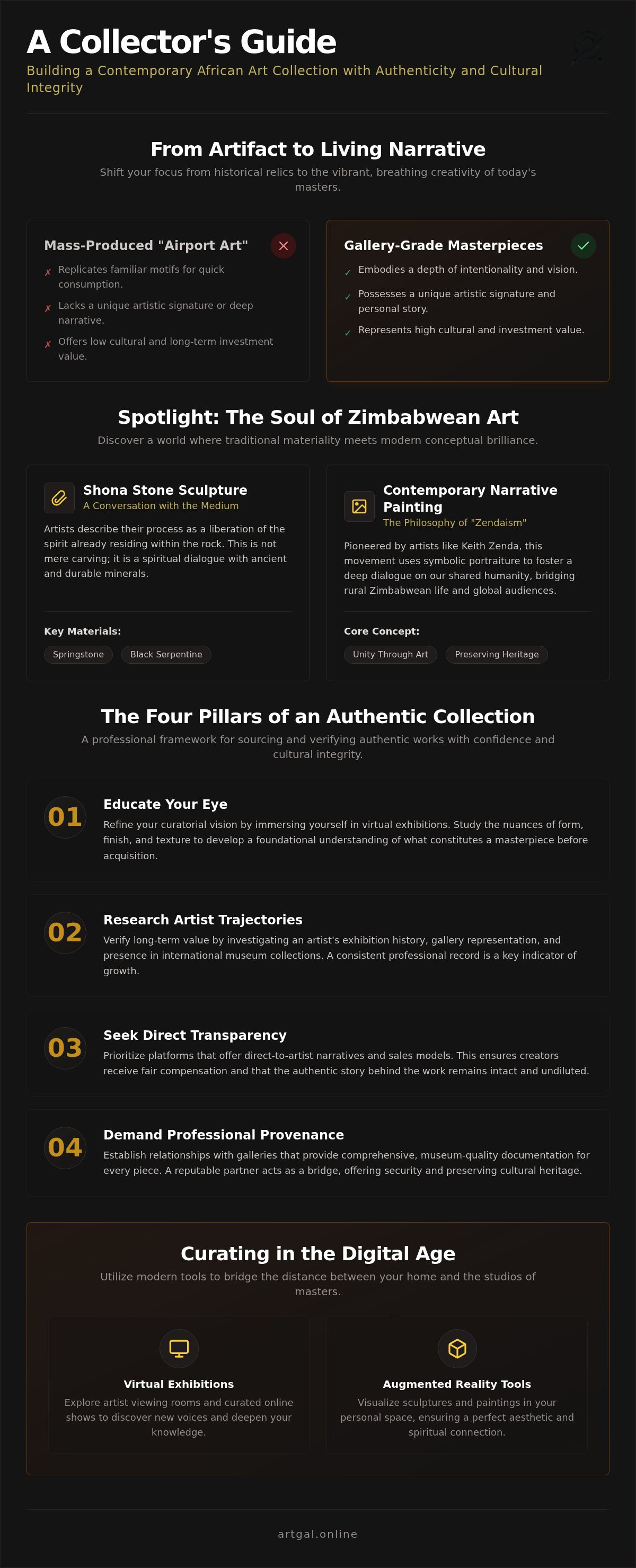
The journey of a collector begins with a profound shift in perspective. Historically, global interest often fixated on ethnographic artifacts as relics of the past; however, the modern collector prioritizes contemporary fine art that speaks to living social and spiritual realities. Understanding how to collect African art in 2026 requires moving beyond the curiosity of the archive to engage with the breathing creativity of the present. This transition allows you to build a collection that isn't just an assembly of objects, but a dialogue with the continent's most vital voices.
To curate with intentionality, you must learn to distinguish between mass-produced "airport art" and original, hand-crafted masterpieces destined for the global gallery circuit. While tourist art replicates familiar motifs for quick consumption, true gallery-grade works possess a depth of intentionality and a unique artistic signature. You'll find that focusing on specific regional specializations, such as contemporary Zimbabwean art, provides a clearer path to acquiring works with high cultural and investment value. This regional focus reveals a world where traditional materiality meets modern conceptual brilliance.
The Allure of Shona Stone Sculpture
The tradition of Shona sculpture is rooted in a unique form of spiritual mediumship. Artists like Sampson Kuvenguhwa often describe their process as a liberation of the spirit already residing within the rock. This isn't mere carving; it's a conversation with the medium. High-end Zimbabwean works are defined by their use of dense, durable minerals. You'll frequently encounter Springstone and Black Serpentine, materials prized for their ability to hold intricate detail and achieve the mirror-like, high-polish finishes that characterize these masterpieces. These stones don't just occupy space; they command it through their tactile and spiritual presence.
Contemporary Narrative Painting and Zendaism
If stone represents the eternal, then contemporary narrative painting captures the pulse of the human experience. Keith Zenda has emerged as a pivotal figure in this space, pioneered through his "Zendaism" philosophy. His work utilizes symbolic portraiture to foster a deep dialogue on our shared humanity, bridging the gap between rural Zimbabwean life and global urban audiences. By collecting these narrative-rich pieces, you aren't just purchasing a canvas; you're preserving a heritage while supporting an artistic movement that seeks to unite diverse worlds through color, courage, and coexistence.
The Essential Steps to Building an Authentic African Art Collection
Building a collection that resonates with cultural integrity requires a deliberate and methodical approach. When you begin exploring how to collect African art, your first priority should be educating your eye. Immersing yourself in virtual African art exhibitions allows you to study the nuances of form, finish, and texture from a global perspective. This digital exploration provides a foundational understanding of what constitutes a masterpiece before you make your first acquisition.
Once you've developed an appreciation for specific styles, follow these essential steps to ensure your collection holds lasting value:
- Research Artist Trajectories: Investigate an artist’s exhibition history and their presence in international museum collections. A consistent record of gallery representation is a strong indicator of professional growth.
- Seek Direct Transparency: Prioritize platforms that offer direct-from-artist sales. This model ensures that creators receive fair compensation and that the narrative behind the work remains intact.
- Demand Museum-Quality Documentation: Establish relationships with galleries that provide comprehensive provenance. A reputable partner acts as a bridge, offering the security of Swiss-influenced precision alongside the soul of the work.
Verifying Provenance and Authenticity
Authenticity in Shona sculpture is often found in the technical mastery of the finish. Master sculptors use traditional techniques like heat-applied natural waxes to bring out the deep, lustrous colors of the stone. To protect your investment, consult our guide on verifying Shona sculpture authenticity. This resource details the specific certification requirements and hallmarks that distinguish a genuine work from a mass-produced replica.
The Ethics of Collecting: Supporting the Artist Community
Leveraging Digital Innovation and Global Curation in 2026
The digital age has fundamentally reshaped the landscape of fine art acquisition, offering collectors unprecedented access to global movements. Mastering how to collect African art in 2026 involves embracing these technological advancements to ensure a seamless and informed experience. You're no longer restricted by the physical walls of a gallery; instead, you can participate in an immersive journey that spans from the alpine precision of Switzerland to the vibrant cultural hubs of Zimbabwe.
To navigate this modern environment with confidence, consider these innovative tools and practices:
- Visualize with Precision: Use the Artgal.Online mobile app to project intricate sculptures into your living space via Augmented Reality, ensuring the piece resonates with your environment's scale and spirit.
- Connect with Narratives: Explore artist viewing rooms to discover the narrative depth of each work, connecting directly with the artist's vision through high-definition media and curated storytelling.
- Secure Your Investment: Coordinate with specialized art logistics partners who understand the unique requirements of stone and canvas. Professional insurance and climate-controlled shipping are essential components of modern stewardship.
The Role of Virtual Galleries in Modern Collecting
Virtual galleries serve as a vital bridge, connecting rural Zimbabwean studios with the international market. These platforms prioritize high-resolution imagery and rich, interpretive text, allowing you to curate your collection with the same confidence you'd feel in a physical space. It's about more than just viewing; it's an immersive discovery that respects the artist's context while providing the transparency required for high-end acquisition.
Curation for the Future: Long-Term Stewardship
True curation extends beyond the moment of purchase. Preserving the tactile beauty of Shona stone requires simple yet consistent care, such as dusting with a soft cloth and occasional re-waxing to maintain its natural luster. For mixed-media paintings, ensure they are displayed away from direct sunlight to protect the pigment's integrity. By practicing thoughtful stewardship, your collection becomes a lasting legacy that contributes to the global recognition and preservation of African contemporary art.
Cultivating Your Legacy in Contemporary Curation
Building a collection of contemporary African art is a deeply rewarding endeavor that bridges the gap between aesthetic beauty and cultural advocacy. We've explored the essential shift toward contemporary fine art, the importance of ethical provenance, and the ways digital innovation now allows you to bring the soul of Zimbabwean studios directly into your home. By prioritizing direct-from-artist narratives and utilizing tools like augmented reality, you transform the act of acquisition into a meaningful form of cultural stewardship. To complement your collection with other contemporary styles, you can visit Wine Art Gallery and explore their selection of original paintings and artist-designed home decor.
Mastering how to collect African art with confidence requires a partner that values both precision and passion. As a Swiss-based gallery featured on major international platforms, we offer the security of global transactions paired with the intimate stories of masters like Sampson Kuvenguhwa and Keith Zenda. Every piece we represent is a testament to the enduring spirit of Zimbabwean creativity, provided with the museum-quality documentation your collection deserves.
Your journey into the heart of African creativity starts with a single, thoughtful choice that'll resonate for generations to come.
Frequently Asked Questions
How can I tell if an African sculpture is authentic or mass-produced?
Authenticity is revealed through the technical mastery of the finish and the unique signature of the artist's hand. Authentic Shona sculptures are hand-carved from dense minerals like Springstone, featuring intricate details and a deep, lustrous polish achieved through heat-applied natural waxes. In contrast, mass-produced items often display repetitive machine marks and a lack of the spiritual intentionality found in gallery-grade masterpieces.
Is contemporary African art a good financial investment for new collectors?
Contemporary African art has become a vital segment of the global market, offering significant potential for value appreciation over time. When you're learning how to collect African art, focusing on artists with documented exhibition histories and museum representation provides a more secure foundation for your investment. While the primary value lies in the work's cultural resonance, the rising international demand for authentic voices ensures that well-curated collections retain their prestige.
What is Shona sculpture and why is it significant in the African art market?
Shona sculpture is a world-renowned movement from Zimbabwe that transforms raw stone into evocative forms representing spiritual and human narratives. Its significance stems from its ability to maintain traditional mediumship while speaking to a modern, global audience. These sculptures are celebrated for their tactile elegance and the spiritual dialogue between the artist and the medium, making them a cornerstone of any sophisticated contemporary collection.
How do I safely ship large stone sculptures from Africa to Europe or the US?
Safely transporting large stone works involves partnering with specialized art handlers who provide custom-built crates and secure logistics. Protecting your investment requires comprehensive insurance and precise documentation to navigate international customs seamlessly. When exploring how to collect African art, it's essential to work with a gallery that offers end-to-end shipping coordination, ensuring your piece arrives in pristine condition regardless of the distance.

Article by
Artgal.Online Editorial Team
The Artgal.Online Editorial Team works closely with artists, curators, researchers, and collectors to produce authoritative articles on contemporary African art, Zimbabwean culture, Shona sculpture, collecting, and exhibitions. Articles are reviewed in collaboration with the artists whenever possible to ensure authenticity and accuracy.
Disclaimer
The information presented in these articles, guides, infographics and educational resources is intended for general informational and educational purposes only. While every effort is made to ensure accuracy, completeness and relevance, Artgal.Online and its contributors do not guarantee that all information reflects the most current market conditions, auction results, valuations or scholarly opinions. Opinions expressed are those of the author and are provided to encourage appreciation, understanding and discussion of Zimbabwean and contemporary African art. This content should not be considered financial, legal, tax or investment advice. Readers are encouraged to conduct their own research and seek professional guidance where appropriate. References to artists, artworks, markets or collecting trends are intended for educational purposes and do not constitute a guarantee of future value or investment performance.


