

What if the masterpiece on your wall did more than simply capture the light? What if it became a lasting investment in people's lives and in the future of Zimbabwean art?
It is a question many discerning collectors ask as they seek a deeper connection with the works they acquire. Today's collectors increasingly value transparency, authenticity, and meaningful impact. Yet the rise of "art-washing"—where charitable claims become little more than marketing language—has made it difficult to know whether purchasing artwork genuinely supports communities or simply enhances a brand's image.
At **Artgal.Online **, every acquisition represents more than the purchase of an exceptional work of contemporary African art. It is an investment in artists, cultural preservation, education, and humanitarian programmes that create measurable change throughout Zimbabwe.
Each sale directly supports the continued development of the ****Artgal Zim Center in Domboshava, where emerging artists receive professional mentorship, exhibition opportunities, and practical training to build sustainable artistic careers. By nurturing local talent, the centre helps preserve Zimbabwe's internationally celebrated artistic traditions while encouraging innovation for future generations.
Beyond supporting artists, proceeds also contribute to two important humanitarian initiatives:
- ****Mwana Anokosha Humanitarian Aid Organization, which provides assistance, educational support, and opportunities for children living with disabilities, helping them develop confidence, independence, and access to resources that many families would otherwise struggle to obtain.
- **Alive Albinism Initiative **, dedicated to supporting people living with albinism through education, advocacy, healthcare awareness, social inclusion, and community programmes that help combat discrimination while promoting equal opportunities and dignity.
These initiatives reflect Artgal.Online's belief that art has the power not only to inspire but also to transform lives.
Whether you collect contemporary Zimbabwean paintings, museum-quality Shona stone sculptures, or emerging African artists, your investment contributes directly to preserving artistic heritage while strengthening communities through education, mentorship, inclusion, and humanitarian support.
For collectors who value authenticity, craftsmanship, and social responsibility, owning a work from Artgal.Online means becoming part of a larger story—one where exceptional contemporary African art creates lasting cultural and humanitarian impact for generations to come.
Key Takeaways
- Discover how collecting contemporary African art goes beyond ownership, helping preserve Zimbabwe's living artistic heritage while providing direct support to the artists who create it.
- Learn about the power of "Material Alchemy," where Zimbabwean Springstone, reclaimed materials, and locally sourced resources are transformed into museum-quality artworks that strengthen local craftsmanship and sustainable supply chains.
- Understand the mentorship model at the Artgal Zim Center, where established artists such as Sampson Kuvenguhwa and Keith Zenda inspire and mentor emerging artists, equipping rural youth with professional skills, creative confidence, and cultural pride.
- See how every artwork purchased contributes to meaningful social impact, supporting the Artgal Zim Center alongside the Mwana Anokosha Humanitarian Aid Organization, which assists children with disabilities, and the Alive Albinism Initiative, which promotes inclusion, education, and opportunities for people living with albinism.
- Explore how your collection becomes part of a larger legacy, preserving Zimbabwe's internationally recognised artistic traditions while helping fund artist development, humanitarian programmes, educational outreach, and community empowerment for future generations.
The Intersection of Fine Art and Philanthropy
To define art that supports charity is to recognize a conscious model where the act of acquisition directly nourishes social, educational, and cultural ecosystems. This approach moves beyond the simple exchange of currency for a physical object, evolving instead into a "living heritage" that provides immediate, tangible benefits to the creators. When you choose a piece through this framework, the transaction serves as a catalyst for community resilience. It ensures that the hands carving the stone or guiding the brush are the ones most empowered by the sale, creating a cycle of sustainability that protects the artist's autonomy while fostering regional growth.
Consider the profound concept of "Art as Healing." For many creators, the creative process is a vehicle to restore individual and community dignity, transforming personal narratives into shared triumphs. Original works, particularly Shona stone sculptures, act as sacred vessels. They carry ancestral stories from the heart of Zimbabwe into the global spotlight, while simultaneously providing the economic stability required to keep these traditions vibrant. This relationship is a modern extension of the long history of Art patronage, where the collector's role is reimagined as a partnership in cultural survival.
The Evolution of Socially Conscious Collecting
Modern collectors are increasingly prioritizing a "return on impact" alongside aesthetic value. With the introduction of the One Big Beautiful Bill (OBBB) Act in 2025, the 2026 tax year has seen a shift in how individuals approach their contributions. Whether it's the new $1,000 deduction for single non-itemizers or the increased standard deduction, the motivation for giving has become more strategic. Collectors now seek targeted preservation projects that offer transparency, moving away from generic donations toward initiatives that provide a clear, traceable benefit to specific artistic communities.
Why Cultural Heritage is a Charitable Priority
Supporting art that gives life to the "broken and silent" voices of history is a profound act of advocacy. Many Zimbabwean traditions rely on a form of "spiritual mediumship," where the artist acts as a bridge between the physical and spiritual realms. By investing in art that supports charity, you help maintain these delicate threads of identity. Master artists like Sampson Kuvenguhwa and Keith Zenda use their work to heal and restore, ensuring that the unique perspectives of their heritage remain a vibrant part of the global cultural conversation rather than a forgotten relic of the past.
How Art Purchases Transform Communities and Cultural Landscapes
The transformative power of art that supports charity is most visible in the concept of "Material Alchemy." By sourcing indigenous materials like heavy Springstone or incorporating reclaimed fabrics, artists stimulate a localized supply chain that honors the land while providing income to rural quarry workers and vendors. This intentionality ensures that the beauty of the final piece is rooted in the economic health of the community where it was born. It's a method that turns raw, local resources into global ambassadors for Zimbabwean resilience.
Beyond the raw materials, the true foundation of the Artgal Zim Center is the mentorship of the next generation. Under the guidance of internationally recognised painter Keith Zenda , emerging artists receive hands-on training in painting, composition, colour theory, and the philosophy of Zimbabwean contemporary art. More than technical instruction, Zenda encourages young artists to develop their own artistic voice while remaining connected to their cultural heritage. Alongside this educational programme, the achievements of master sculptors such as Sampson Kuvenguhwa continue to inspire aspiring artists, demonstrating the extraordinary heights that Zimbabwean creativity can achieve through originality, dedication, and craftsmanship.This transfer of knowledge acts as a safeguard against cultural erosion, providing rural youth with a path toward professional mastery and spiritual purpose. Much like the National Endowment for the Arts supports cultural infrastructure in the United States, these private mentorship initiatives create a self-sustaining ecosystem of creativity that doesn't rely on external aid alone.
Economic Empowerment Through Direct Artist Sales
Choosing a direct-from-artist model fundamentally alters the financial trajectory of a creator's family. While traditional high-commission galleries often retain a significant portion of a sale, fair-trade platforms ensure that the majority of the value stays with the artist. This direct support allows creators to invest in their own tools, provide for their children, and maintain their studios without the pressure of predatory pricing. You can explore more about this impact in our guide on Supporting Emerging African Artists Through Direct Sales.
Funding Local Infrastructure and Education
Your acquisition extends its influence far beyond the gallery wall. Proceeds from art that supports charity contribute to vital community infrastructure, ensuring that the creative spirit has the physical resources to thrive. Key social outcomes include:
- Direct clean-water support for rural artistic hubs through the Artgal Zim Center.
- Distribution of professional-grade art materials to emerging creators in remote villages.
- The establishment of permanent creative workspaces that serve as sanctuaries for rural youth.
If you wish to learn more about our current community initiatives, please feel free to reach out to our curatorial team for a deeper conversation.
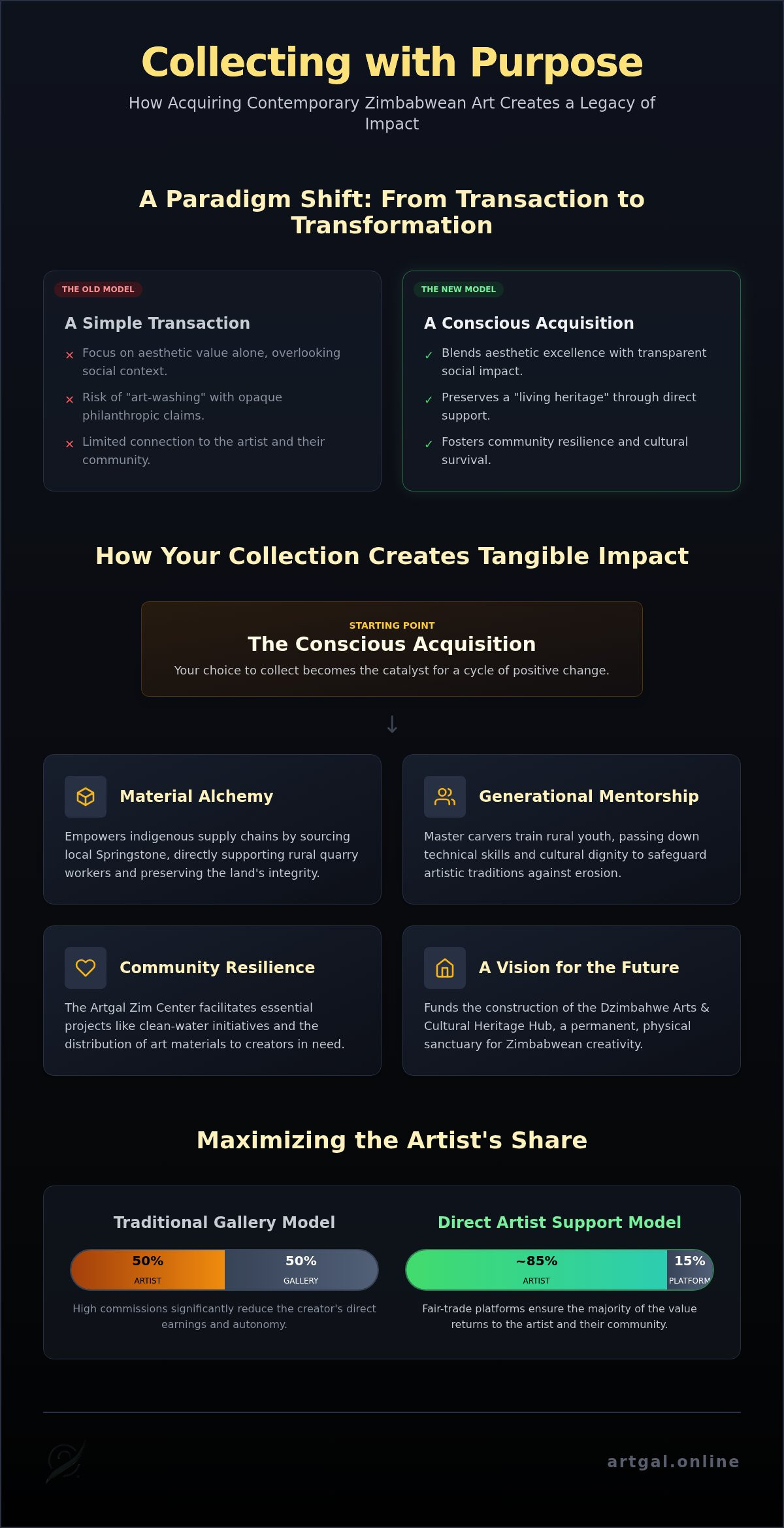
Collecting with Purpose: The Artgal.Online Model of Impact
Collecting with purpose transforms the solitary act of acquisition into a shared journey of cultural preservation. This intentionality is anchored in physical and digital spaces that ensure the longevity of Zimbabwean creativity. Central to this mission is the Artgal Zim Center , a tangible platform where traditional techniques meet contemporary ambition. Every sculpture as well as every painting acquired through Artgal.Online extends far beyond the collector's home. It helps create brighter futures by supporting the Mwana Anokosha Humanitarian Aid Organization for children with disabilities and the Alive Albinism Initiative , ensuring that art becomes a powerful catalyst for inclusion, dignity, and lasting social change in Zimbabwe.
The Artgal Zim Center: A Hub for Practical Training
The center acts as a vital bridge. It connects ancestral wisdom with modern artistic expression through immersive workshops that foster resilience in rural communities. These sessions allow artists to reclaim their identity while refining their craft in a professional environment. It's a space where the "broken and silent" voices find their strength, ensuring that the human element of creation remains at the heart of every piece produced. By providing art materials and practical training, the center empowers creators to move beyond survival into a state of artistic excellence.
Virtual Exhibitions as Tools for Global Awareness
Digital accessibility is equally crucial to our mission. Through virtual African art exhibitions, the stories of artists like Keith Zenda reach a global audience without losing their cultural soul. These platforms use augmented reality to bring Zimbabwean narratives into international homes, ensuring that delicate Shona symbolism is interpreted responsibly and consistently across borders. This creates a global viewing room that respects the artist's original intent while inviting collectors into a meaningful, immersive experience.
By engaging with art that supports charity, you transition from a spectator to a sophisticated cultural ambassador. We invite you to explore our curated collections and participate in a model where every acquisition empowers a heritage hub and secures a future for authentic Zimbabwean voices. Your collection becomes a testament to resilience and a bridge between worlds.
Cultivating a Legacy of Living Heritage
The journey of a collector is often defined by the narratives they choose to champion and the traditions they help preserve. By embracing art that supports charity, you ensure these cultural stories remain vibrant and self-sustaining for generations to come. We've explored how direct-from-artist models protect the dignity of creators, while physical platforms like the Artgal Zim Center provide the essential mentorship necessary for traditional crafts to flourish. Your investment becomes a foundation for meaningful change, supporting the Mwana Anokosha Humanitarian Aid Organization , which assists children with disabilities, and the Alive Albinism Initiative , empowering people living with albinism through education, inclusion, and opportunity.
This partnership highlights the exceptional talent of award-winning artists, including National Gallery prize winners, whose profound visions are now accessible through our curated digital spaces. It's an invitation to participate in a sophisticated form of ambassadorship that honors ancestral wisdom while securing economic stability for rural communities. As you refine your collection, you're not just acquiring an object; you're nurturing a resilient ecosystem where aesthetic beauty and social responsibility coexist in perfect harmony.
Explore our curated exhibitions and support our charities!
We invite you to step into this world of intentionality and discovery, where every piece serves as a bridge to a brighter future. Your passion for the arts has the power to restore dignity and inspire a new era of cultural resilience.
Frequently Asked Questions
Does buying art from Artgal.Online really support local artists?
Yes, our direct-from-artist model ensures that the majority of every sale goes directly to the creators and their families. This transparent approach bypasses traditional high-commission gallery structures, allowing Zimbabwean artists to maintain their autonomy and invest in their own professional tools. By prioritizing authentic voices, we help sustain the livelihoods of master carvers and contemporary painters while fostering a self-reliant creative economy within rural communities.
What specific charitable projects does my art purchase fund?
Your acquisition provides essential funding for the Artgal Zim Center, where emerging Zimbabwean artists receive professional training, exhibition opportunities, and mentorship under internationally recognised painter Keith Zenda. Beyond supporting artistic development, proceeds also benefit the Mwana Anokosha Humanitarian Aid Organization , which assists children living with disabilities, and the Alive Albinism Initiative , dedicated to improving the lives of people with albinism through education, advocacy, healthcare awareness, and social inclusion. Together, these initiatives demonstrate how every artwork purchased contributes not only to preserving Zimbabwe's artistic heritage but also to creating meaningful and lasting humanitarian impact.
How can I verify the social impact of my art acquisition?
We believe in transparency and periodically share news about the Artgal Zim Center , the Mwana Anokosha Humanitarian Aid Organization , and the Alive Albinism Initiative through our viewing rooms , digital journals and online exhibitions . These updates allow collectors to see how their acquisitions support emerging artists, humanitarian programmes, and the preservation of Zimbabwe's rich artistic heritage. Every artwork becomes part of an ongoing story of creativity, inclusion, and lasting social impact.
Is there a difference between art charity and fair-trade art?
While fair-trade art focuses on equitable compensation, art that supports charity creates a sustainable ecosystem that reinvests in the community's future. Our model combines these concepts by ensuring artists are paid fairly while simultaneously funding long-term cultural infrastructure and educational workshops. This dual approach moves beyond simple transactional ethics to build physical sanctuaries and provide mentorship, transforming a single purchase into a lasting legacy for an entire creative generation.

Article by
Artgal.Online Editorial Team
The Artgal.Online Editorial Team works closely with artists, curators, researchers, and collectors to produce authoritative articles on contemporary African art, Zimbabwean culture, Shona sculpture, collecting, and exhibitions. Articles are reviewed in collaboration with the artists whenever possible to ensure authenticity and accuracy.
Disclaimer
The information presented in these articles, guides, infographics and educational resources is intended for general informational and educational purposes only. While every effort is made to ensure accuracy, completeness and relevance, Artgal.Online and its contributors do not guarantee that all information reflects the most current market conditions, auction results, valuations or scholarly opinions. Opinions expressed are those of the author and are provided to encourage appreciation, understanding and discussion of Zimbabwean and contemporary African art. This content should not be considered financial, legal, tax or investment advice. Readers are encouraged to conduct their own research and seek professional guidance where appropriate. References to artists, artworks, markets or collecting trends are intended for educational purposes and do not constitute a guarantee of future value or investment performance.


